


What Is a Rain Garden? Ideas for Managing Heavy Rain Naturally
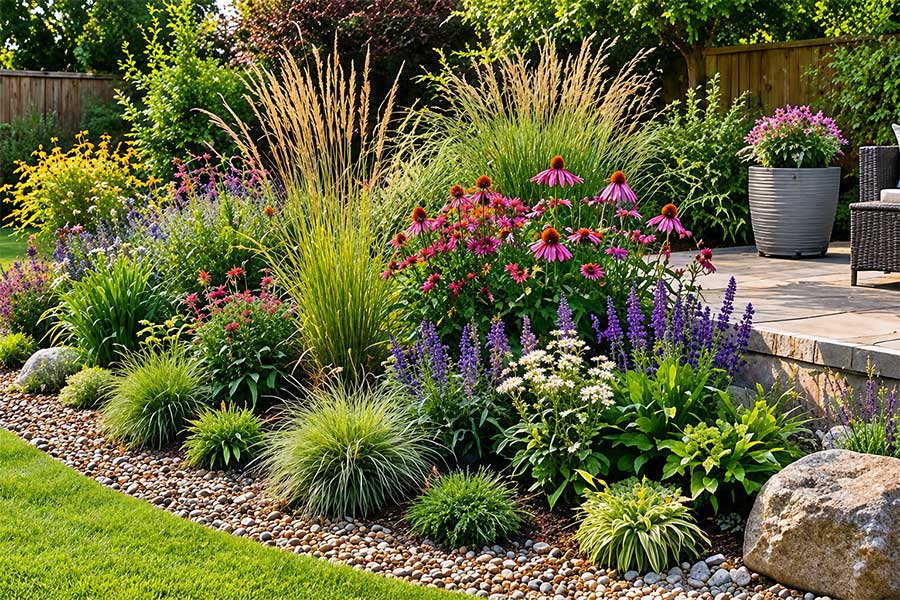
After a dry summer, autumn's frequent rainfall can cause problems in your garden, particularly if the wet weather continues for several days. Heavy downpours can lead to puddly lawns, muddy borders and water running off hard surfaces and putting extra pressure on nearby drains. So how can you tackle this and better manage excess rainwater in your garden?
One option is to create a rain garden and make use of the rainwater rather than letting it go to waste. Rain gardens can help your garden store and absorb more water, as well as providing a home for wildlife and enabling you to grow a wider variety of plants. Read on to find out more about rain gardens and their benefits, alongside tips for creating one of your own.
What is a rain garden?
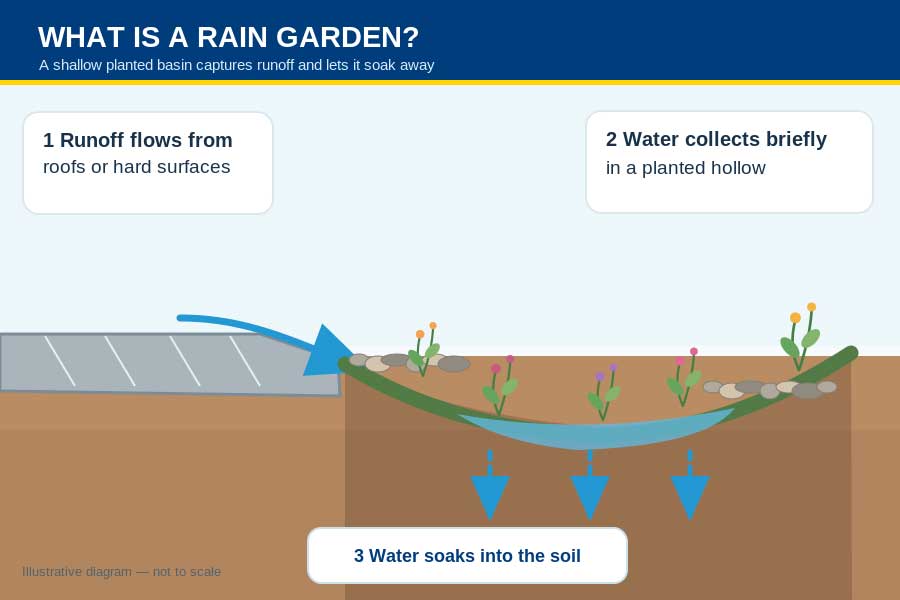
A rain garden is a slightly sunken, planted area designed to collect rainwater runoff from roofs, patios and driveways. Water either flows into it naturally or is directed there from a downpipe, where it gathers temporarily before gradually soaking into the soil.
Working like a natural sponge, this helps to slow the flow of water during heavy showers, reducing surface runoff and the risk of localised flooding. The plants and soil within the bed also provide the added benefit of filtering out some of the pollutants carried by the water.
Unlike a pond or bog garden, a rain garden doesn't stay wet all the time. Most of the time, it looks much like an ordinary flower bed or planted border. The main difference is the choice of plants, which will need to tolerate both occasional waterlogging and periods of dry weather.
Why are rain gardens becoming more popular?
Given the UK’s increasingly unpredictable weather, many homeowners are looking for ways to help their gardens stand up to changing conditions. Summer droughts can take their toll on lawns and borders, while sudden storms saturate the ground and cause water to pool on hard surfaces. Rain gardens give that water somewhere to go and offer several other benefits too:
- Less standing water: Channelling rainwater runoff to a designated area can help prevent puddles forming in inconvenient areas.
- Reduced soil erosion: Slowing down rainwater will help stop soil and more delicate flowers being washed away during heavy downpours.
- Less watering: Once established, rain garden plants should only need occasional watering, with the exception of prolonged periods of drought.
- An attractive garden feature: Rain gardens can be incorporated into existing borders or used to transform a low-lying area into a colourful planted feature.
- Less pressure on drains: Encouraging more water to soak into the ground can reduce the amount entering and potentially overwhelming drainage systems.
- More wildlife: Planting a mix of flowering plants and grasses can provide food and shelter for bees, butterflies and birds – ideal if you want to attract more wildlife.
Rain gardens can be particularly useful in places where water regularly collects or runs off a nearby roof, patio or path. However, they're not intended to solve serious drainage problems on their own. If you're dealing with more extensive flooding around your property, take a look at our guide to preventing surface water flooding around the home.
Where could you put a rain garden?
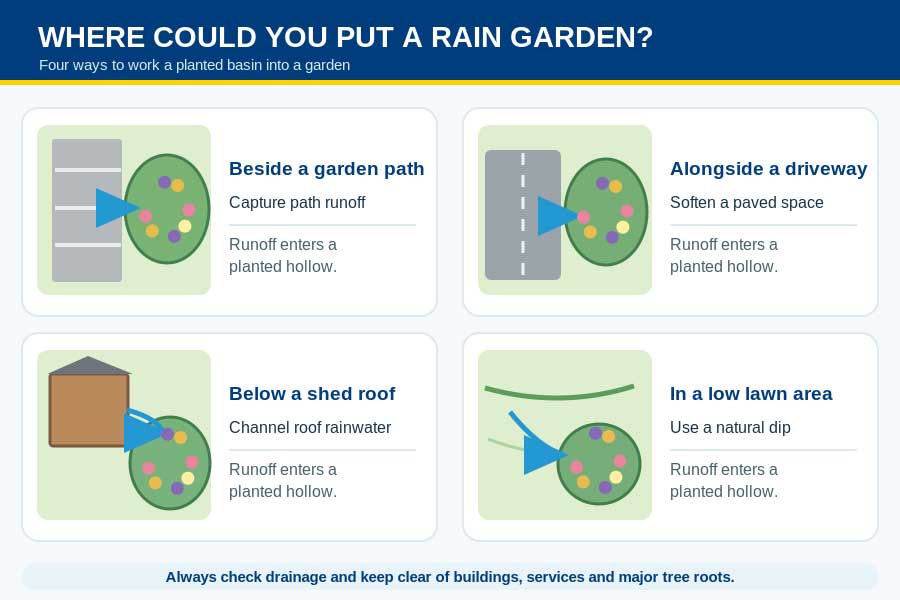
You don't necessarily need a large garden or a dedicated space to create a rain garden. It could be a small planted area beside your patio, a section of lawn that regularly gets soggy or an existing border that you adapt to collect rainwater.
The key is to choose somewhere that water can reach easily, either by flowing downhill naturally or being channelled from a roof or paved area. Ideally, the spot should get plenty of sunlight or partial shade, with soil that drains well. Some rain garden ideas to consider include:
- Turning a low-lying section of lawn into a planted bed
- Creating a border that collects runoff from a patio or garden path
- Making use of rainwater from a shed or greenhouse roof
- Adding a planted feature alongside a driveway or parking area
- Using a gentle slope to direct water into a lower part of the garden
Wherever you decide to put it, we’d recommend positioning your rain garden at least 5 metres away from your house to help protect the foundations. You should also avoid areas with underground pipes or cables, large tree roots or ground that stays permanently waterlogged.
If water regularly collects close to your property, it's worth getting professional drainage advice before making any changes.
Rain garden design ideas
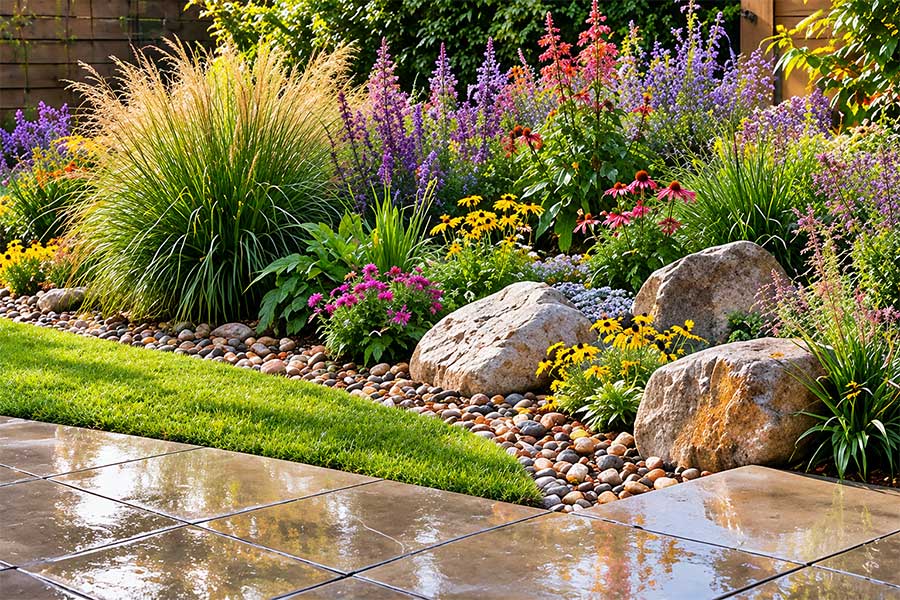
Rain gardens can be just as attractive as any other planted area, and there are plenty of ways to make them fit with the rest of your garden. From decorative gravel and cobbles to colourful planting and natural stone, the materials you choose can make a big difference to the finished look. Here are a few rain garden ideas for inspiration:
Gravel and cobble rain garden
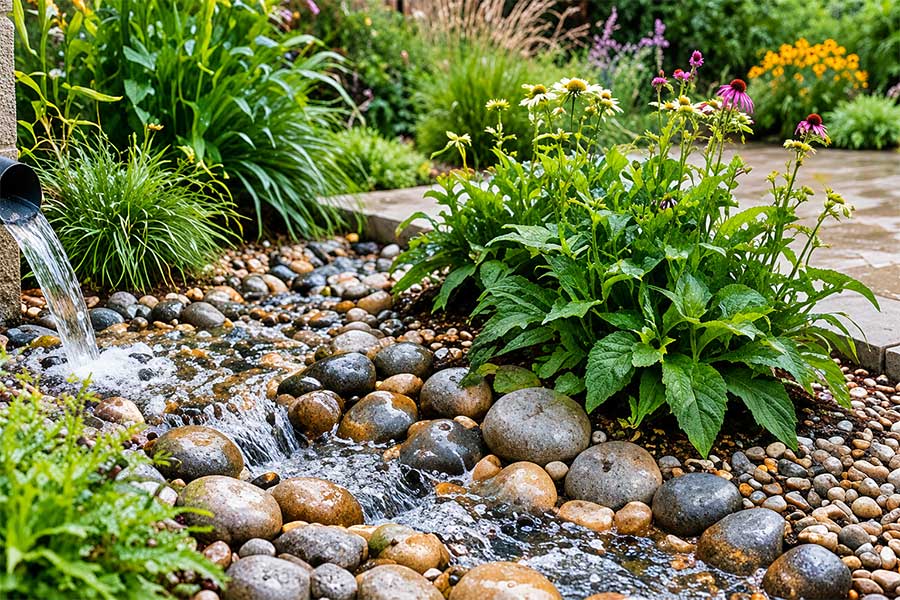
If you’d prefer an informal design, try combining decorative gravel with larger cobbles and pebbles to create a low-maintenance feature that blends into your garden. You could even create a dry stream bed leading into your rain garden, which will fill with water on rainy days.
Gravel can be used to form a channel that directs water into the planted area, while larger cobbles or rockery stones help protect the soil where the water enters. Mixing different sizes and colours of stone can also add interest to the feature.
At AWBS, you'll find a wide choice of affordable decorative gravel to suit different garden styles. For help choosing the right type, take a look at our guide to decorative aggregates.
Rockery-style rain garden
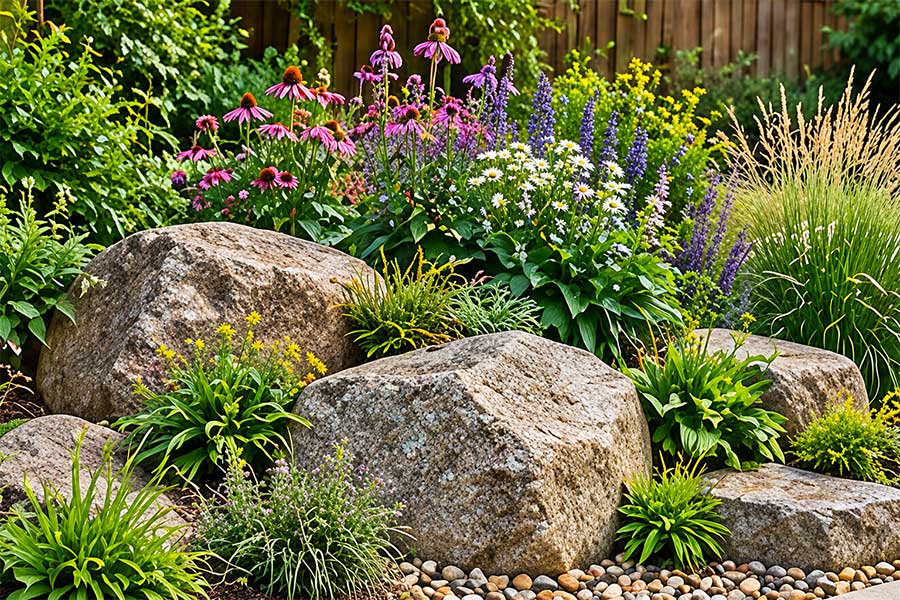
If you have a larger space to work with, why not incorporate rockery stones and boulders into your rain garden? They work particularly well on gently sloping ground, where you can arrange them at different heights to create a more varied design.
Larger stones can be positioned around the edges of the rain garden, with smaller rocks and plants filling the gaps between them. Add ornamental grasses, ferns and moisture-tolerant perennials to soften the stonework and create a natural-looking feature that becomes more established over time.
Rain garden beside a path
If you're adding a rain garden alongside an existing path, try making it part of the path's design rather than treating it as a separate feature.
A narrow planted border can collect water running off the paving, while decorative gravel, edging stones and low-growing plants help create a neat transition between the path and surrounding garden. You could also add some stepping stones to make the area easier to access for maintenance.
Planning a new path? At AWBS, we stock permeable materials specifically designed to allow more rainwater to soak through. Read our garden path ideas guide to find out more.
Front garden rain garden
With driveways and paths often taking up much of the space, front gardens can be a good place to create a rain garden that helps reduce puddles and surface runoff.
You could add a gravel border alongside your driveway, make use of a low-lying area beside the entrance path, or create a small planted bed between the parking area and the rest of the garden. Decorative stone, boulders and edging can all be used to give the space a tidy finish, while flowering plants will add a burst of colour to your chosen design.
If you're planning changes to your driveway too, we’d advise choosing a permeable surfacing material that rainwater can pass through. AWBS supplies options for gravel driveways, resin-bound surfaces and permeable block paving, including Brett Omega Flow. For more information and recommendations, read our guide to SuDS compliant permeable driveways.
How to create a rain garden
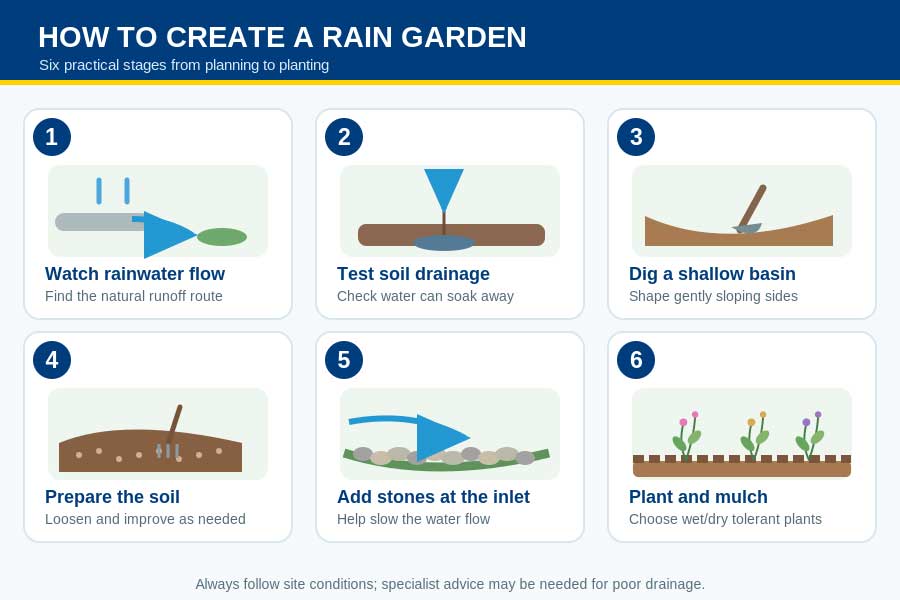
Ready to prep and build your rain garden? Here's how to create one in six simple steps:
1. Choose a suitable spot
Watch where water flows during or after heavy rainfall. Choose an area that sits lower than the surface collecting the water, so it can run naturally into your rain garden. As mentioned earlier, keep well away from house foundations and underground services.
2. Check the soil drainage
Before you commit, dig a hole, fill it with a bucket of water and see how quickly it drains away. Ideally, the water should disappear within 24 to 48 hours. If the ground stays waterlogged for longer, you'll need to find a spot that drains more quickly. Otherwise, your plants could develop root rot and eventually die.
3. Dig out your rain garden
Next, use string to mark out the shape of your rain garden. We'd recommend a curved or kidney-shaped design, although the exact shape is up to you. Dig out a basin between 15–30cm deep, with gently sloping sides and a level base. Use some of the excavated soil to create a small raised edge on the downhill side to help keep the water contained.
4. Prepare the soil
Loosen any compacted soil at the bottom of the basin using a garden fork. Depending on your soil type, you could also mix in some compost and sand to improve its structure and provide better growing conditions. If the existing soil is poor quality, you could also add some fresh topsoil to give your plants a better start.
5. Add stones where water enters
Place some cobbles, gravel or larger stones where rainwater enters the garden, particularly if it's flowing from a downpipe or paved surface. These will help to slow the flow of water and prevent soil from being washed away, while also creating an attractive, natural-looking feature.
6. Add plants and mulch
Once the area is prepared, add your chosen plants, leaving enough space for them to grow. Then spread a layer of bark chippings or mulch around the plants to help suppress weeds, protect the soil and retain moisture. Just make sure you choose a mulch that won't easily wash away when the rain garden fills with water.
What materials can you use in a rain garden?
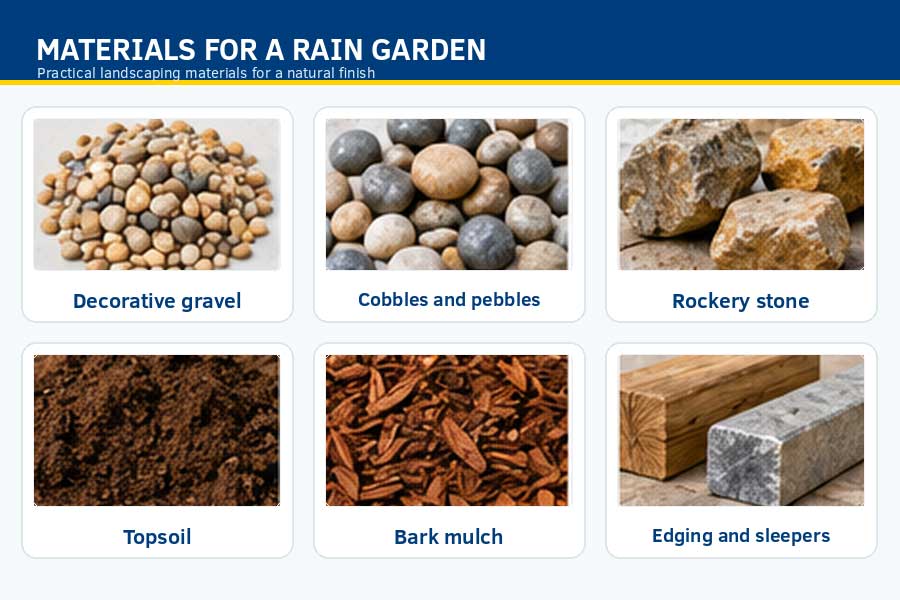
The right materials can help your rain garden manage water effectively while making sure it complements the rest of your garden. Depending on your design, you might use:
- Decorative gravel: Good for creating channels, dry stream beds and helping to prevent soil erosion.
- Cobbles and rockery stone: Useful for slowing the flow of water, defining edges and creating features that blend in with their natural surroundings.
- Topsoil and compost: Help prepare planting areas and provide suitable growing conditions for your chosen plants.
- Bark and mulch: Help suppress weeds, retain moisture and protect the soil’s surface. Choose a type that won't easily float away.
- Log edging or sleepers: Can define the shape of your rain garden, especially where it meets a lawn, path or gravel area. We stock both log edging and garden sleepers.
- Permeable paving materials: Useful for nearby driveways, paths and parking areas, allowing more rainwater to soak through rather than running off the surface.
AWBS also stocks specialist drainage products for gardens that need more substantial help.
What plants are best for a rain garden?
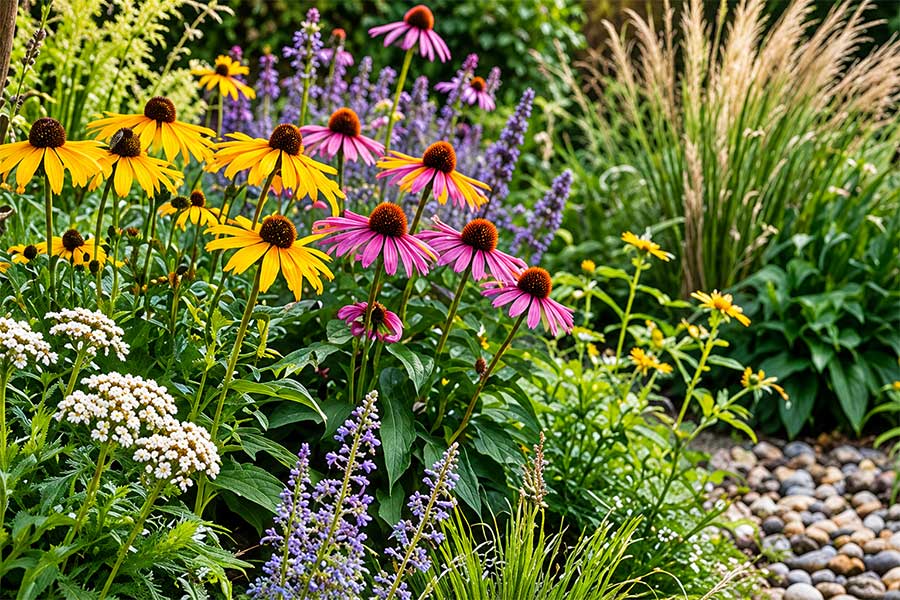
Rain garden plants will need to withstand both wet and dry conditions, as the ground can become waterlogged during heavy rainfall before drying out again a few days later. Luckily, there are plenty of hardy grasses, shrubs, perennials and wildflowers to choose from. Some popular examples include:
- Dogwood: A hardy shrub with red, orange or yellow stems to bright up winter gardens
- Elder: A larger shrub with white summer flowers and dark berries that attract wildlife
- Siberian iris: A flowering perennial with elegant purple, blue or white blooms
- Carex (sedges): Grass-like plants with arching leaves that add texture and movement
- Lythrum: A perennial with tall spikes of pink-purple flowers that attract pollinators
- Geraniums: Low-growing plants with pink, purple, blue or white flowers that fill gaps
- Foxgloves and primroses: Cottage garden favourites with colourful blooms, from pink and purple foxgloves to pale yellow primroses. Both work well around drier edges.
However, you will also need to think about your soil type and how much sunlight the area gets. Plants that can tolerate wetter soil are best placed in the lowest part of the rain garden, while those that prefer drier conditions can go around the edges.
If you're unsure what to plant, pop into our sister store, Oxford Garden Centre, next door to AWBS Oxford. The team will be happy to help you find suitable plants for your project.
Can a rain garden help a waterlogged garden?
While a rain garden can help to reduce standing water, it won't solve every drainage problem. If your garden gets soggy because rainwater runs off a patio, path, shed roof or driveway, a rain garden can give that water somewhere to collect and gradually soak into the ground.
However, if your whole garden stays wet for long periods or water regularly pools near your house, there may be an underlying drainage issue. This could be caused by heavy clay soil, poor drainage or a high water table. In these cases, you’ll need to look at other solutions, like improving the soil, installing drainage channels or choosing permeable paving. If in doubt, contact a drainage specialist for advice.
Find everything you need for your rain garden at AWBS
Whether you're adding a small planted border or transforming a larger area, AWBS has a wide range of landscaping materials to help you create your very own rain garden, all available with FREE local delivery.
Explore our selection of decorative gravel, rockery stone, topsoil, bark and mulch, log edging and garden sleepers, along with paving and drainage products for larger projects. Once you’ve found what you’re looking for, you can place your order online, over the phone or visit your nearest AWBS branch in Oxford, Yarnton or Swindon.
Our in-store landscaping display areas give you the chance to see materials in person, compare colours and finishes, and find inspiration. Our team is also on hand to answer any questions and help you choose the right materials for your project.