


How to Rescue Your Dead Lawn: Autumn Guide

After an exceptionally hot, dry summer, lawns across Oxfordshire and Wiltshire are showing the effects. July 2026 was the driest July in England and Wales since records began, leaving many gardens with brown grass, bare patches and hard, dry soil.
The good news is that a brown lawn isn't necessarily a dead lawn. Grass can become dormant during prolonged dry weather, conserving its resources below ground before starting to recover when cooler, wetter conditions return.
With that in mind, Autumn is the ideal time to assess the damage and give your lawn some attention. Whether it needs a little help to regenerate or a fresh start with new turf, here's how to get it looking healthy again.
Is your lawn dead or dormant?
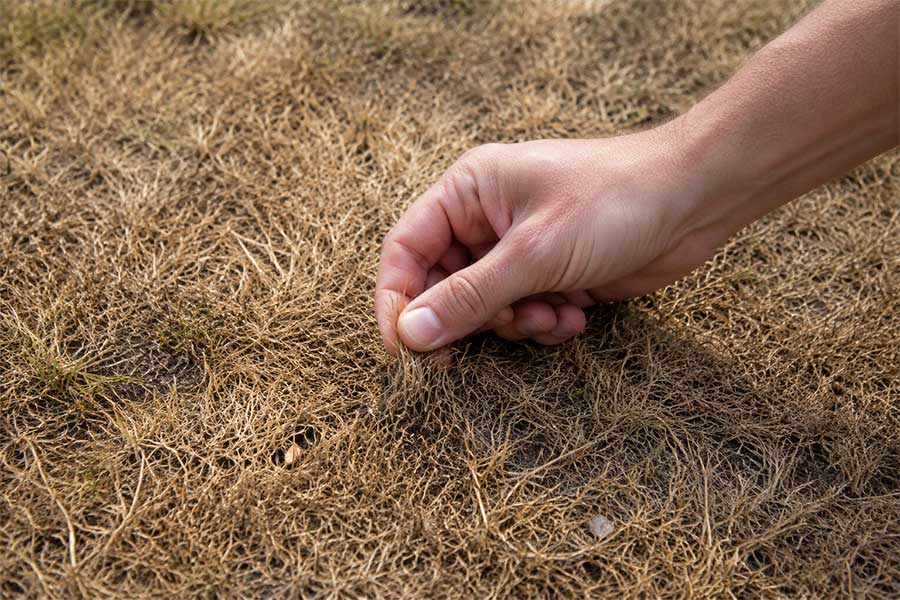
Before starting any lawn repairs, you’ll need to work out whether the discoloured patches of grass are actually dead. To do this, give it a gentle tug in a few of the worst-looking areas. If it stays firmly rooted, it's probably dormant and should rejuvenate once regular rainfall returns. If sections pull away easily and expose bare soil underneath, the grass has most likely died.
The key thing is not to judge your lawn on colour alone. Drought-stressed grass can take several weeks to green up again, so give it a chance to respond before replacing it all together. If most of your lawn is still alive, follow the drought lawn care steps below to help restore its health and encourage new growth.
Part 1: How to rescue a drought-damaged lawn
1. Clear away dead grass and thatch
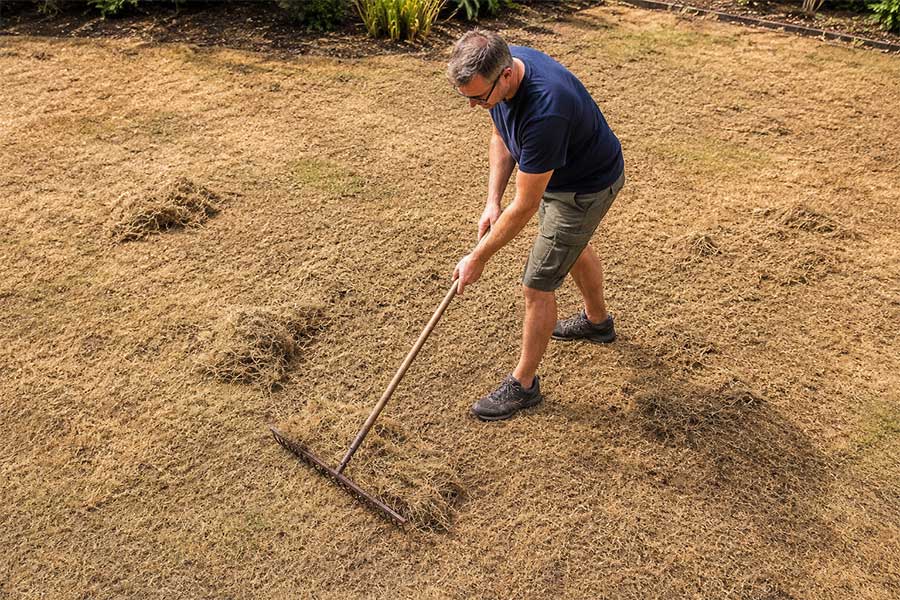
Start by giving the lawn a thorough rake to remove loose dead grass, moss and excess thatch from the living grass. A heavy build-up can make it harder for water and air to reach the soil and will also get in the way when you come to overseed later.
A spring-tine rake is suitable for most gardens, although a mechanical scarifier will make lighter work of a large lawn or particularly heavy thatch. Work firmly across the surface to remove the dead material, taking care not to pull up grass that's still well rooted.
Don't worry if your lawn looks thinner and patchier when you've finished. Clearing away the old material exposes the soil and gives the surviving grass and new seed more room to grow.
2. Aerate compacted ground
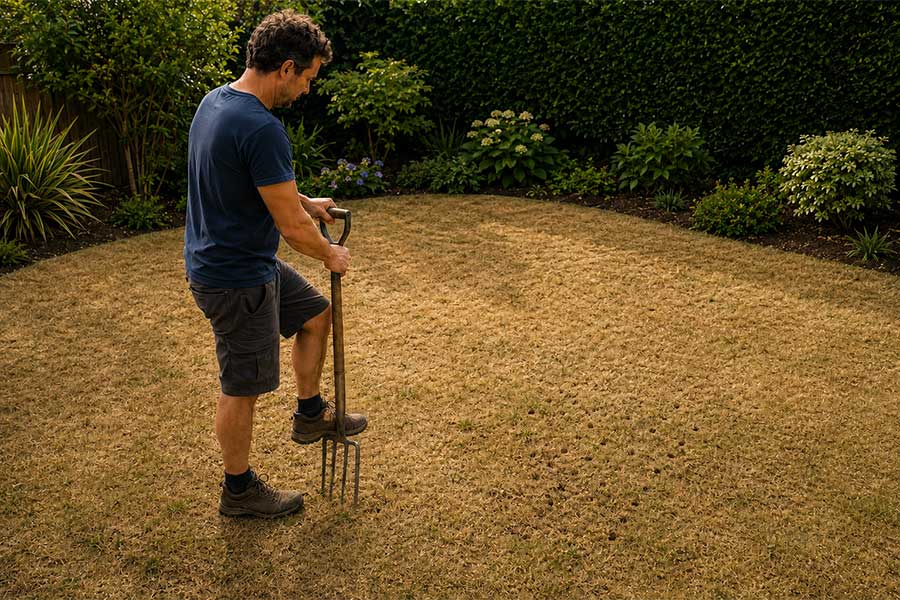
Months of dry weather and regular foot traffic through the summer can leave the soil beneath your lawn heavily compacted. If the ground still feels hard underfoot, aerating it will help autumn rain, air and nutrients reach the roots more easily.
Wait until rainfall has softened the soil enough to work comfortably, then use a garden fork or mechanical aerator to open it up across the lawn. Rolawn recommends making holes around 8–10cm deep and 10–15cm apart, concentrating on well-trodden areas and anywhere water tends to run off rather than soak in.
3. Topdress the lawn
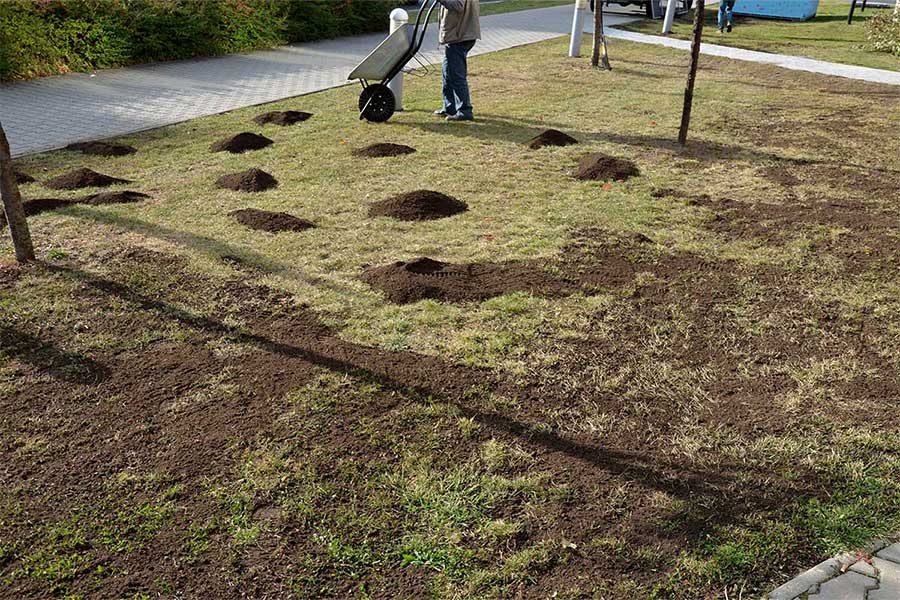
Once you've aerated the soil, topdressing can help improve the lawn's surface and fill minor dips or cracks left behind by the drought. Spread a light layer over the grass and work it in with a rake or stiff brush, making sure the existing grass blades remain visible.
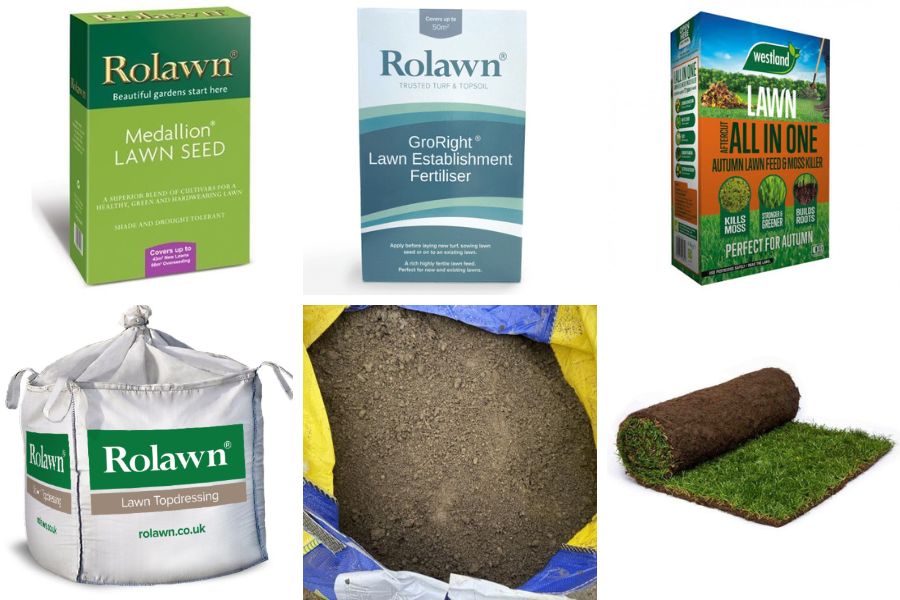
For larger renovation projects, we stock high-quality Rolawn Lawn Topdressing in 500-litre jumbo bags. This sand-based dressing is designed for established lawns and works to create a more even surface, aid drainage and encourage new growth.
If you're only repairing a few damaged areas, Westland Lawn Seeding Soil may be more practical. Available in 30-litre bags, its fine mix of organic matter, loam and sand can be used to prepare individual bare or worn patches before reseeding.
4. Overseed bare and thin areas
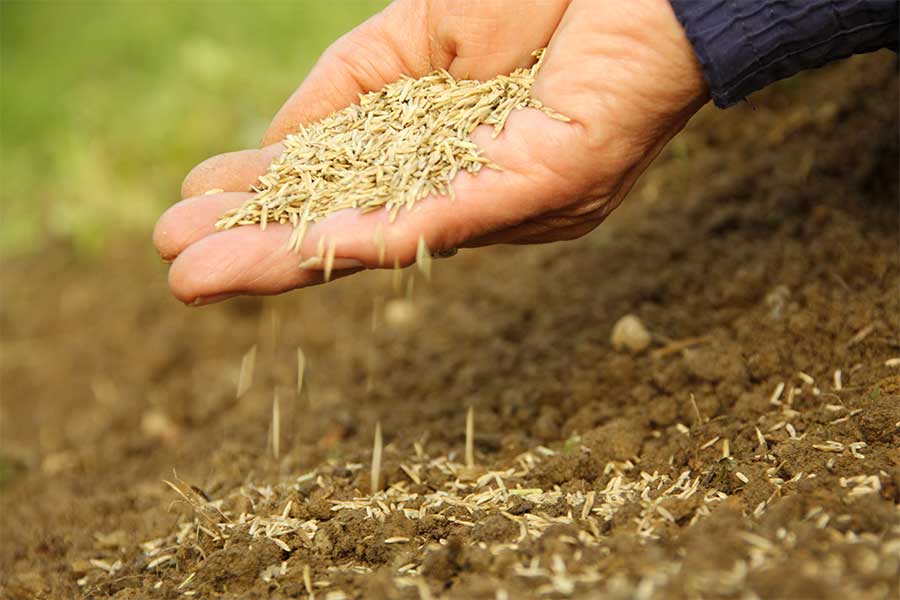
A few dead patches don't mean you have to replace the whole lawn. Overseeding is great for filling gaps and thickening sparse spots once you've cleared any thatch and improved the soil.
Lightly rake bare patches to loosen the surface, then spread the grass seed over the area evenly. Gently rake it into the soil, level the area and water well. You can also cover repaired patches with a weed control membrane to help retain warmth and moisture and protect the seed from birds. Just remember to remove it once shoots appear and if there isn’t much rain, water the ground regularly to keep it moist.
Rolawn Medallion Lawn Seed is a good choice for drought-damaged lawns. Its ryegrass and fescue blend is selected for rapid establishment, wear resistance and tolerance of drought. The 1kg box covers approximately 43m² when overseeding and is available for collection from AWBS, while a 20kg bag is available for larger projects.
For more detailed advice on patch repairing your lawn, read this article by experts Rolawn.
5. Apply an autumn lawn feed
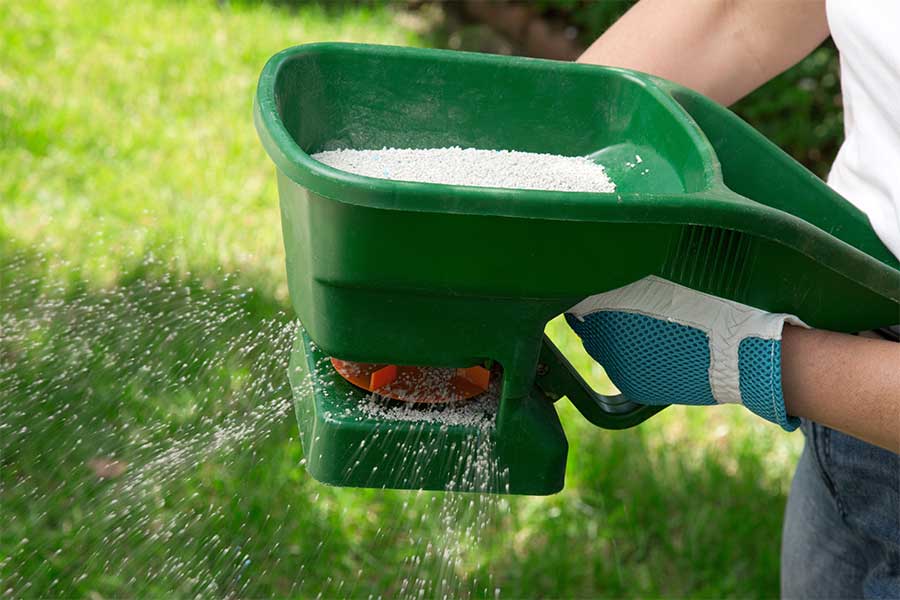
As your lawn begins to recover, feeding it can help strengthen the grass ahead of winter. Choose an autumn lawn fertiliser rather than a spring or summer product, as autumn feeds are formulated around the needs of grass heading into the colder months.
Westland Aftercut All In One Autumn combines lawn feed with moss control. Its blend of iron, potassium and nitrogen is designed to maintain colour, tackle moss and help the grass withstand winter stress without encouraging excessive growth. Find it at our sister store, Oxford Garden Centre, located next door to AWBS Oxford.
Applying fertiliser once or twice in autumn is usually enough to support your lawn until spring. However, always check the application rate, as using too much can do more harm than good.
6. Take it easy with the mower

Once fresh green growth begins to appear, resist the temptation to immediately give the lawn a close cut. Give recovering grass time to strengthen and allow newly seeded areas to reach around 5cm or more before mowing.
For the first few cuts, we’d recommend keeping the mower on a higher setting and removing no more than around one-third of the grass blade at a time. Keeping the grass slightly longer also shades the soil beneath, helping it hold onto moisture during any further dry spells.
As the lawn becomes thicker and stronger, you can gradually return to your usual mowing routine. If some areas still show no signs of recovery after following the steps above, it may be time to consider laying fresh turf.
Part 2: Replacing a dead lawn with new turf
Sometimes a dead lawn is simply too badly damaged for overseeding alone. If large areas of grass pull away easily, substantial sections are bare or the lawn was already struggling before the drought, replacing it with new turf may be the best option.
Autumn is a good time to tackle this job. The soil retains some warmth from summer, while cooler temperatures and more regular rainfall provide ideal conditions for roots to establish. With that said, after a drought, you should check the condition of the soil before you start.
When should you lay turf after a drought?
Fresh turf shouldn't be laid directly over ground that's still bone-dry and heavily compacted. New roots need to move from the turf into the soil below and they'll struggle to do that if they immediately meet a hard, baked layer.
Where possible, allow autumn rainfall to rehydrate and soften the ground slightly before you begin. If the dry weather continues, you'll need to spend more time preparing and watering the soil yourself. Once the ground is workable, you can start preparing it for the new lawn.
1. Remove the old lawn and prepare the soil
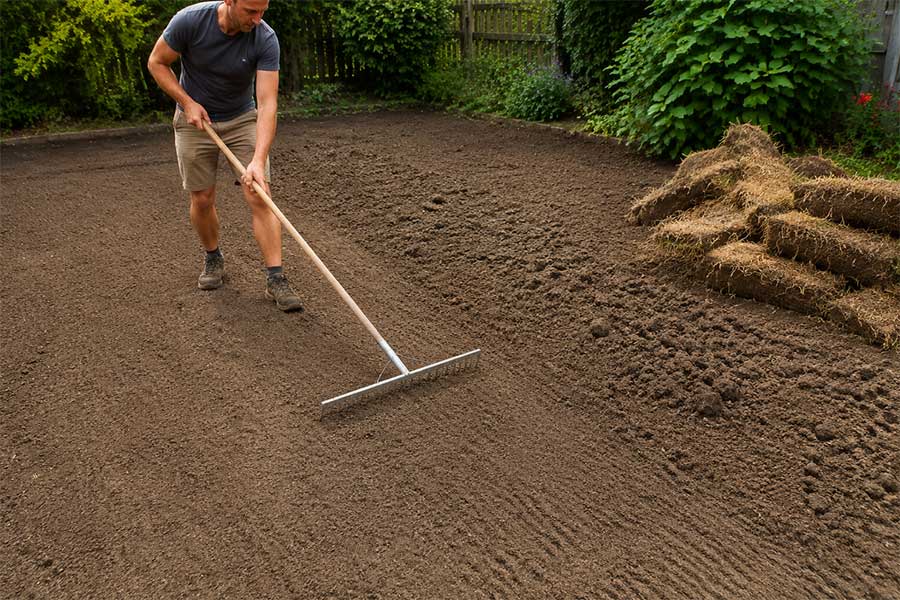
Start by stripping away the dead grass along with any weeds, old roots and large stones. Then dig or rotavate the soil to around 10–15cm deep, loosening compacted ground and breaking up larger clumps as you go.
Once finished, rake the soil to create an even surface, levelling out any obvious dips or high spots. You want to aim for a surface that's firm but not heavily compacted. Taking the time to prepare the ground properly will make the turf easier to lay and give its roots the best chance.
2. Add fresh topsoil where needed
If removing the old lawn has lowered the level, or the existing soil is poor and difficult to work, adding fresh topsoil will create a better foundation for your new turf. Spread it evenly across the prepared ground, rake it level and lightly firm the surface before laying.
For a completely new lawn, Rolawn Turf & Lawn Seeding Topsoil is specifically designed for the job. Its blend of topsoil, sand and soil conditioners includes Rolawn GroRight lawn establishment fertiliser to support the turf as it begins to root.
However, you don't necessarily need a specialist turfing soil. AWBS Premium Topsoil is a screened, free-draining sandy loam suitable for both turfing and seeding. Meanwhile, our Planting Topsoil can be used elsewhere in your garden too, such as for beds and borders.
You should also think about the scale of the repair. Both of our own-brand soils are available in bulk bags, whereas a small patch may only require a few 30-litre bags of Westland Lawn Seeding Soil. This can be used beneath new turf as well as for reseeding and patch repairs.
3. Lay your new turf
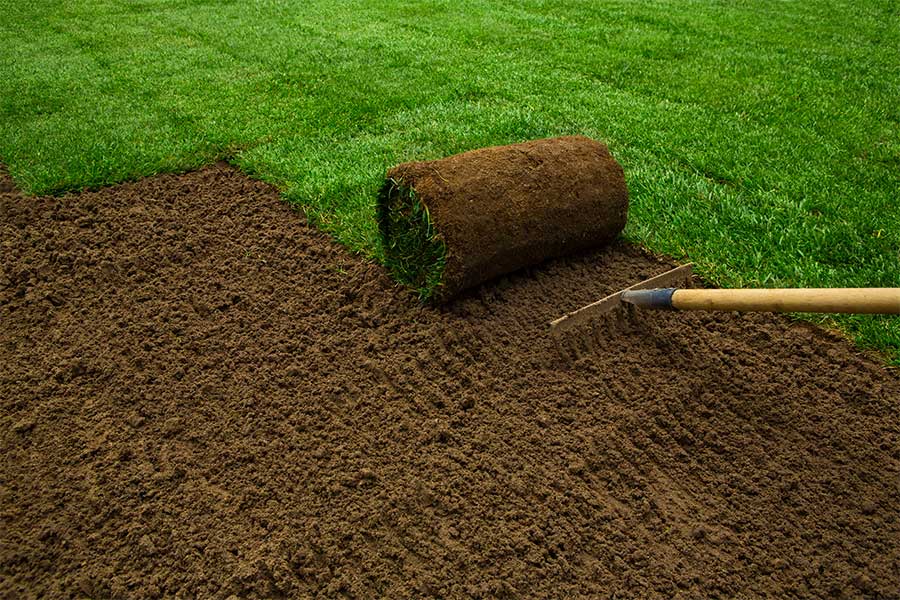 With the ground prepared, you're ready to lay your new lawn. Rolawn Medallion Turf is a popular multi-purpose option, grown from a blend of fescue and ryegrass. It produces a fine-leaved lawn that's hard-wearing, relatively slow-growing and easy to maintain, with good drought tolerance for dry summer weather.
As turf is a living product, make sure all your preparation is complete before it arrives and aim to lay it as soon as possible. Begin along a straight edge, placing each roll snugly against the next without stretching or overlapping it. As you work across the lawn, stagger the joins in a brickwork pattern rather than creating continuous lines.
If you need to cross freshly laid areas, use boards to spread your weight and avoid damaging the turf beneath. Once the whole area is covered, trim the edges neatly to fit and check that there are no gaps between the rolls.
4. Keep your new lawn well-watered
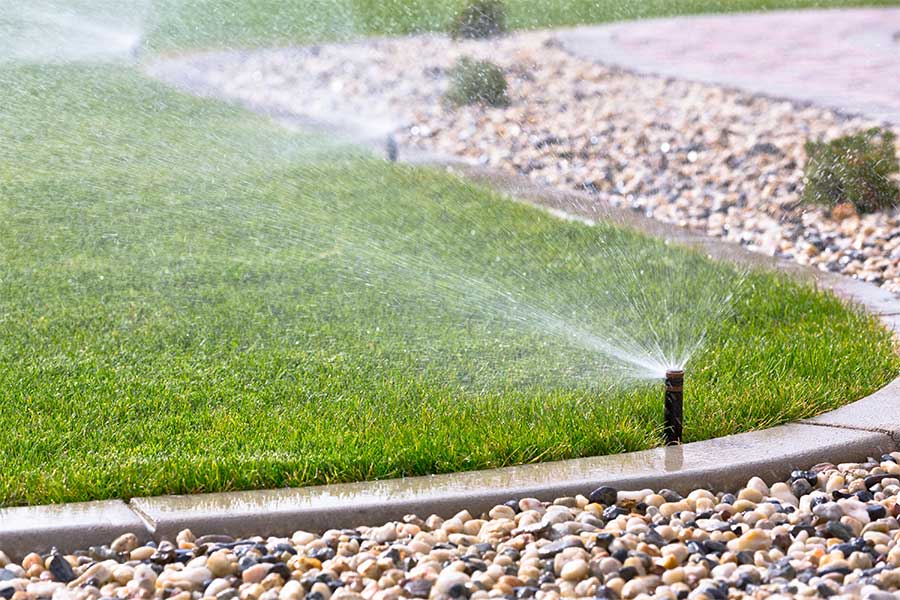
The first few weeks are crucial for newly laid turf, as it needs consistent moisture while the roots establish in the soil below. Water thoroughly as soon as you've finished laying, then continue to check the lawn regularly. Rainfall will help, but it isn’t always enough on its own.
To check moisture levels, carefully lift a corner of the turf and feel the soil underneath. It should remain moist rather than dry and dusty. You may need to water more often during warm or breezy spells, but regular autumn rain should reduce how much watering is needed.
As the roots establish, the turf will become more difficult to lift. Once it's firmly rooted and growing well, you can water it less frequently and prepare for the first mow. Choose a high blade setting and, as with a repaired lawn, only remove a third of the length to start.
Bring your dead lawn back to life with AWBS
A brown lawn isn't always a lost cause. With cooler, wetter weather on the way, autumn lawn care can help dormant grass recover and tackle areas damaged by drought. Scarifying, aerating, topdressing and overseeding can all encourage thicker, healthier growth. If the damage is more extensive, fresh turf can give your lawn a new start.
AWBS stocks everything you need for either approach, including lawn topdressing, grass seed, topdressing and Rolawn Medallion Turf. Browse our full range of turf, grass seed and topsoil on our website or visit our branches in Oxford, Yarnton or Swindon. Our team will be on hand to help you choose the right products and quantities for your lawn if you’re unsure.
We’re open 7 days a week and offer fast and free local delivery within 25 miles of our stores across Oxfordshire, Wiltshire and Berkshire. You can even check your postcode’s eligibility here before you place an order. Alternatively, you can take your chosen lawn care products away with you the same day and get started right away. Just let us know what you’d prefer!