


Decorative Aggregates: Choosing the Right Stones for Your Garden
Decorative aggregates are one of the easiest ways to introduce structure, contrast and texture into your outdoor spaces. From borders and paths to driveways and water features, the right stone can enhance both the appearance and practicality of your garden.
The challenge is knowing which aggregate will work best for your project. While colour is important, stone size, shape and finish all effect how the finished surface looks and performs. Understanding these differences can make choosing the right gravel much easier.
In this guide, we will highlight some best-selling garden gravels and explain how to choose decorative aggregates for different styles and applications. You will also find practical advice on stone sizes, quantities and installation, with tips from our in-house expert Tom Budden.
What are decorative aggregates?
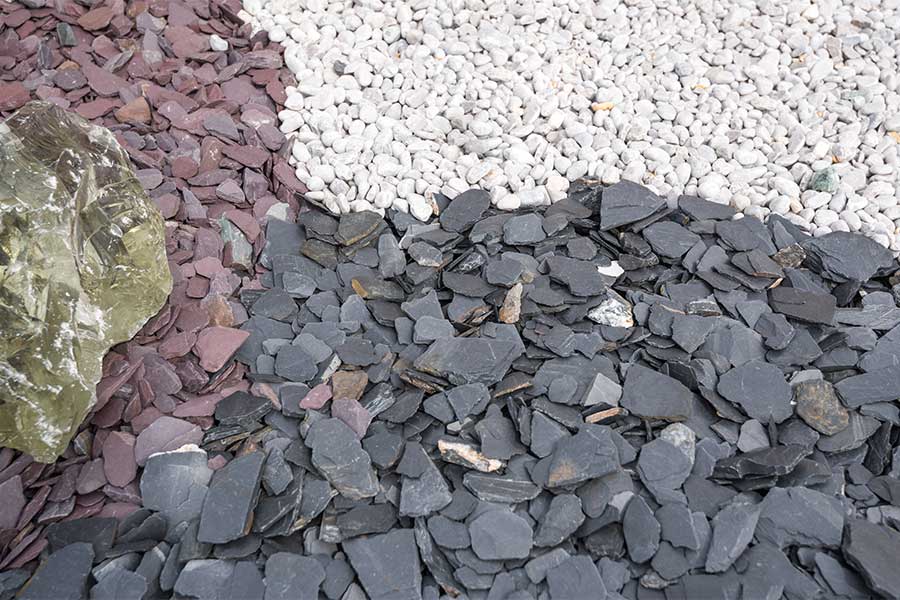
Decorative aggregates are loose natural stones used as hard-wearing, attractive ground cover across a wide range of landscaping projects. They can be used to define paths and driveways, create low-maintenance borders, dress pots and planters, and enhance garden features.
As well as adding colour and texture, they help improve drainage, retain moisture and suppress weeds. Options include gravel, shingle, slate chippings, pebbles and polished stones, each available in a wide choice of colours, shapes and sizes to suit every garden.
Our best-selling decorative stones for gardens
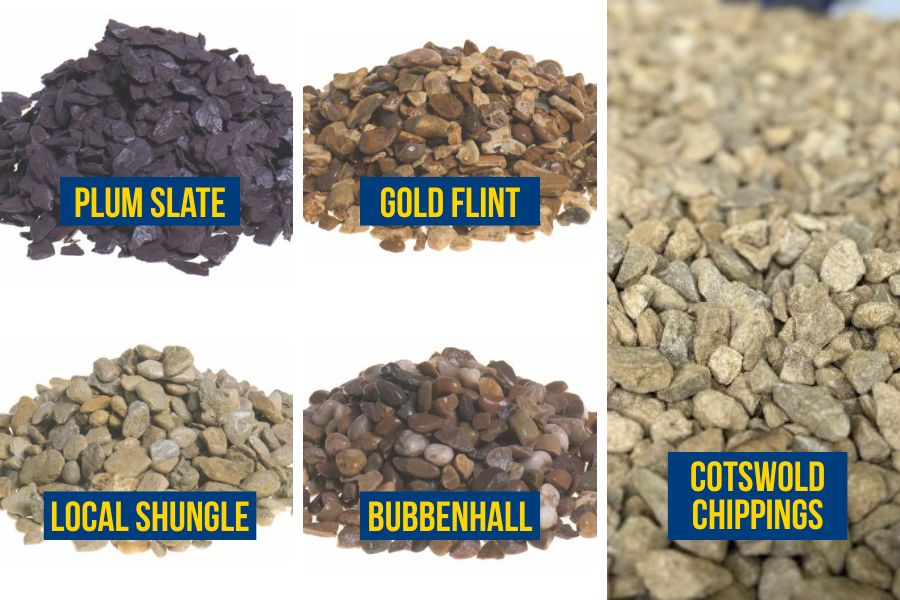
With so many decorative aggregates to choose from, it can be difficult to know where to start. Below, Tom has outlined some customer favourites and the projects they're best suited to.
- Local Shingle – a versatile all-rounder for paths, borders and gravel driveways. Its warm Cotswold buff colour and four stone sizes make it suitable for a range of applications.
- Cotswold Chippings – ideal for brightening borders and planting areas with their light cream tones but, as a softer stone, aren't recommended for driveways.
- Gold Flint – combines warm gold, buff and orange tones with long-lasting durability, making it a good option for paths, water features and driveways.
- Plum Slate – creates a high-end contemporary finish, adding rich purple tones to borders, rockeries and ponds. Not suitable for driveways.
- Bubbenhall – attractive multi-tonal garden pebbles. Rounded with a blend of pink and brown tones that complement borders and paths in traditional gardens particularly well.
Not sure which decorative gravel is right for your garden makeover? Use the table below to compare the best options for common landscaping projects at a glance.
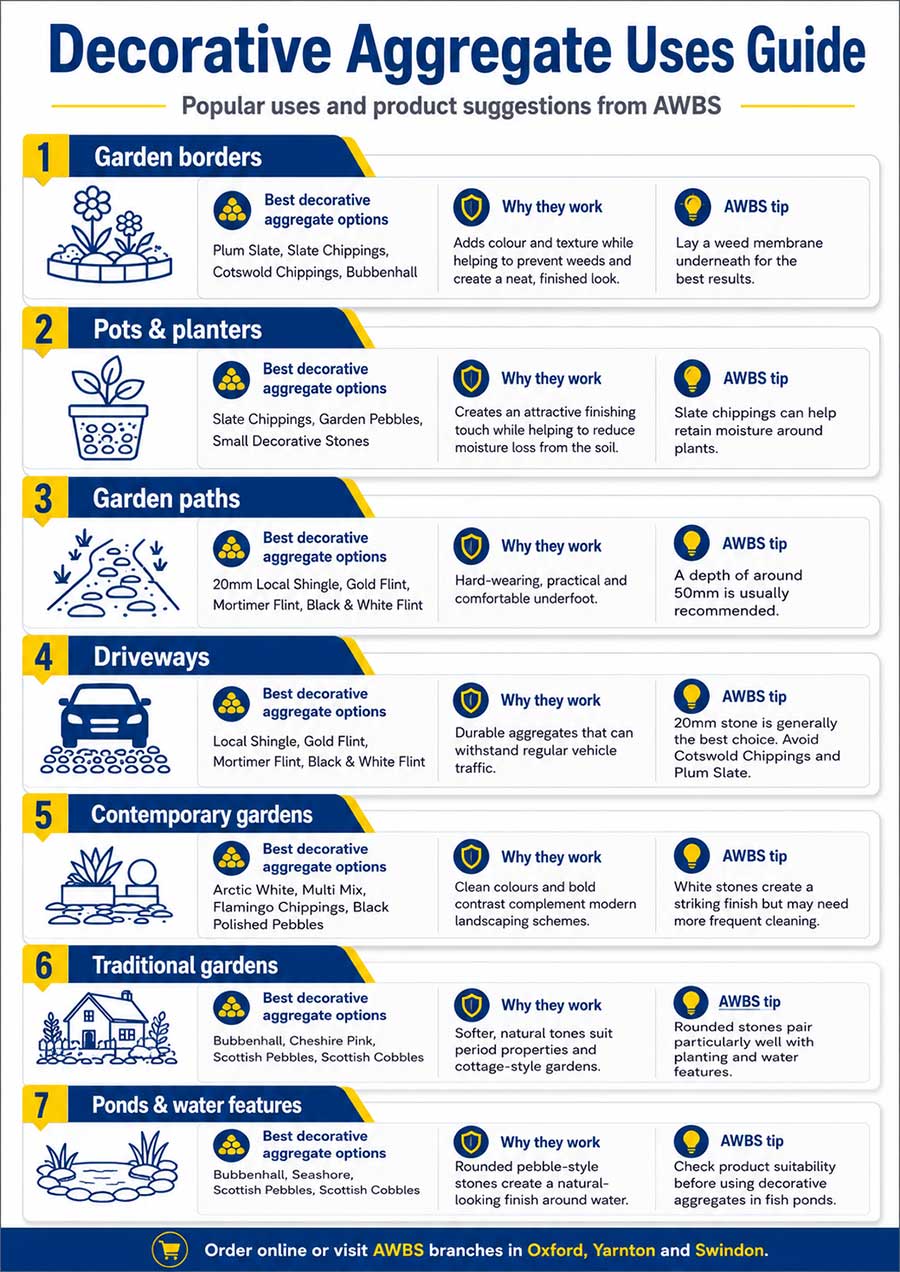
Choosing decorative aggregates by project
From garden gravel to slate chippings and larger pebbles, different materials suit different parts of the garden and applications. Read on as we break down how to choose the best option for each area.
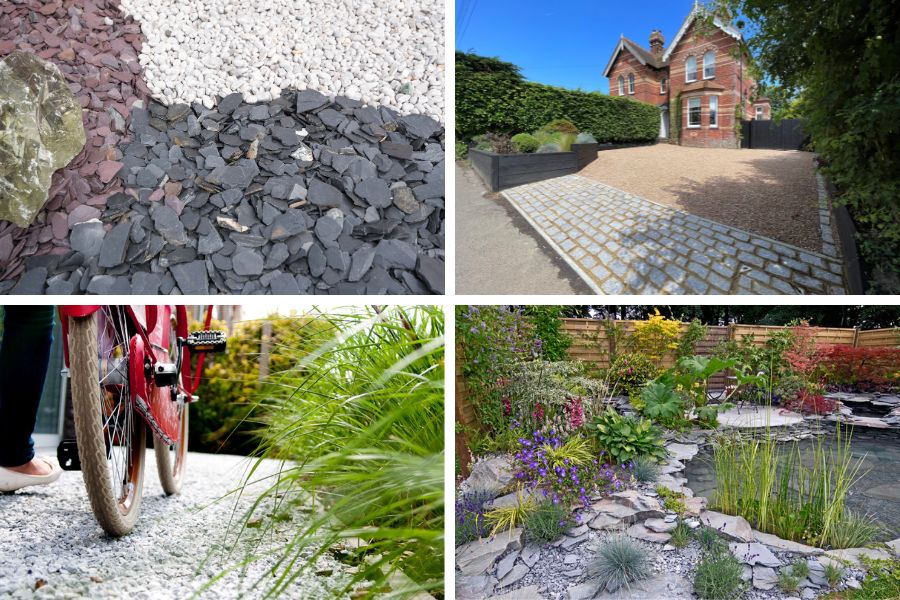
Stone chippings for borders
Decorative aggregates give borders a neat, tidy finish while helping to reduce weed growth and maintenance. Their permeable surface also allows rainwater to drain away naturally, helping to prevent waterlogging after heavy rain. For planting areas, our Plum Slate Chippings are a popular choice. They help slow evaporation and keep the soil moist during warmer weather, while their rich purple tones create a striking finish, especially when wet. Any of our decorative aggregates can be used for borders and planted areas of your garden.
Path gravel
Garden paths need a stone that can withstand regular foot traffic while complementing the rest of your garden. Tom Budden recommends 20mm stone for most paths, as it's more stable underfoot than smaller aggregates. Local Shingle and Gold Flint are both good for creating smart, durable pathways. For best results, lay your path gravel to a depth of around 50mm. Using path grids will reduce spreading and add stability, they also have a handy built in weed control fabric.
Driveway aggregates
Many of our stone chippings can be used as driveway gravel, provided you choose the right type. Again, Tom suggests opting for 20mm aggregate, as smaller stones move more and are more likely to stick in tyre treads. Hard-wearing flint and granite are well suited to driveways. Tom also recommends using Core Drive grids, with a handy built in weed fabric, as the contain the gravel and provide a firmer base that is also buggy and wheelchair accessible.
Popular options include Mortimer Flint with its mix of warm natural tones, and Black & White Flint for a bold monochrome look. Avoid Cotswold Chippings and slate chippings, as these softer stones will gradually break down under regular vehicle use. And remember, driveways should be laid to a depth of at least 75mm, as cars displace more stone than foot traffic.
Rocks for ponds and water features
Decorative aggregates are an effective way to soften the edges of ponds and water features, helping them blend seamlessly into the surrounding landscape. Rounded garden pebbles such as Bubbenhall, Scottish Pebbles and larger cobbles are top picks thanks to their smooth texture and natural blend of colours. Please note, while many products are ideal for water features, always check the suppliers guidance before using them in a fish pond, some can leach colour and minerals that can be harmful to fish.
Choosing decorative aggregates by garden style
Beyond practicality, the colour and finish of your stone can have a big impact on the look and feel of your garden. The right combination should complement your planting and paving, tying the whole design together. Here's what to factor in when choosing aggregates for your garden.
Contemporary garden ideas
Contemporary gardens tend to feature clean lines, bold contrasts and architectural planting. Simple white, black and cool-toned aggregates pair beautifully with porcelain paving, rendered walls and raised beds. For a bright, crisp finish, Arctic White pairs well with contemporary planting schemes, while Multi Mix combining black, white and red chippings is perfect for rockeries and alpine gardens. Flamingo Chippings introduce soft pink, cream and grey tones, while Black Polished Pebbles create contrast around borders, paths and water features.
Traditional garden ideas
Traditional and cottage-style gardens, Tom recommends rounded pebbles in warm natural tones which will complement established planting schemes and older properties. For larger features, smooth Scottish Cobbles add natural colour for a timeless look around borders, borders and ornamental beds. While Bubbenhall and Cheshire Pink Gravel both blend subtle pinks, browns and creams that sit comfortably in classically styled settings.
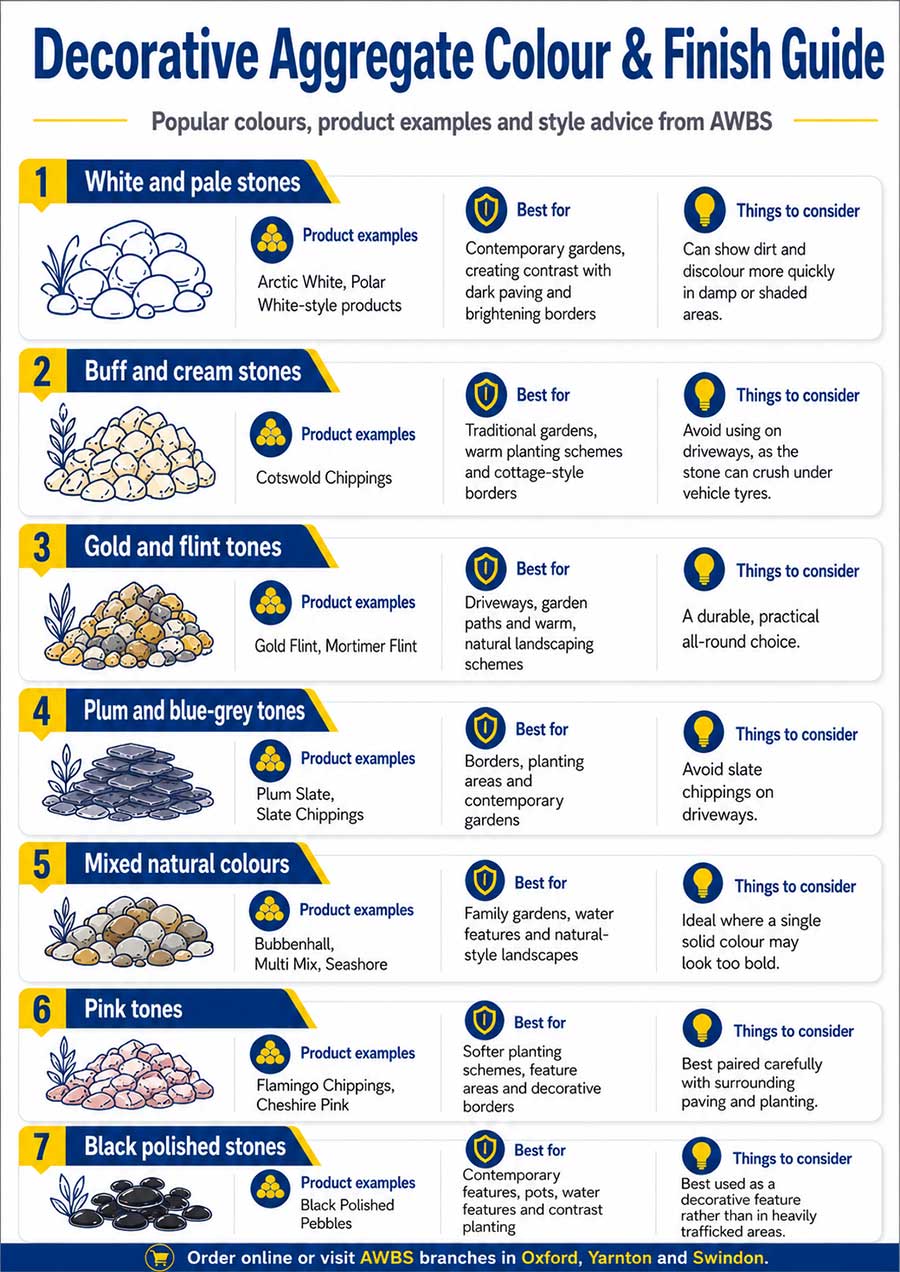
Decorative garden stone colour comparison
Still deciding on a colour? The table below compares some of the most popular finishes to help you find a style that matches your garden scheme.
Choosing the right stone size
Stone size affects both the appearance and performance of decorative aggregates. 20mm stone is suitable for most landscaping projects, providing good coverage while being less likely to move than smaller aggregates on paths and driveways. Smaller chippings, slate and pebbles make attractive top dressing for pots and planters. While larger pebbles and cobbles are great for edging, water features and statement planting, where aesthetics take priority. Ultimately, the right size comes down to how the stone will be used and your preferred finish.
How much decorative aggregate do I need?
Calculating how much decorative aggregate you'll need before ordering can save time, money and waste. As a guide, three of our 23kg small bags will cover approximately 1m², while a jumbo bulk bag typically covers around 10–12m² at a depth of 50mm.
Driveways usually require a deeper layer of 75mm or more, so they'll need more material than borders or garden paths. Before placing your order, try our online Aggregate Calculator to get a clear estimate for how much you will need for your project. Or get in touch and we will help you estimate the correct quantity.
Do I need weed membrane under garden gravel?
In most cases, yes. Tom recommends laying a weed membrane beneath your chosen aggregate to reduce weed growth, prevent soil from mixing with the stone and keep the surface looking cleaner for longer. It will also limit stone movement over time, creating a neater finish that's easier to maintain. For gravel areas next to lawns or patios, consider adding a suitable decorative edging to keep the aggregate contained and prevent it from spreading to surrounding areas.
As an added bonus, we’re currently offering selected bulk bags – including Black Ice Gravel and Flamingo Chippings – with a free 1m x 15m Groundtex geotextile weed membrane!
What sub-base should I use for a gravel path or driveway?
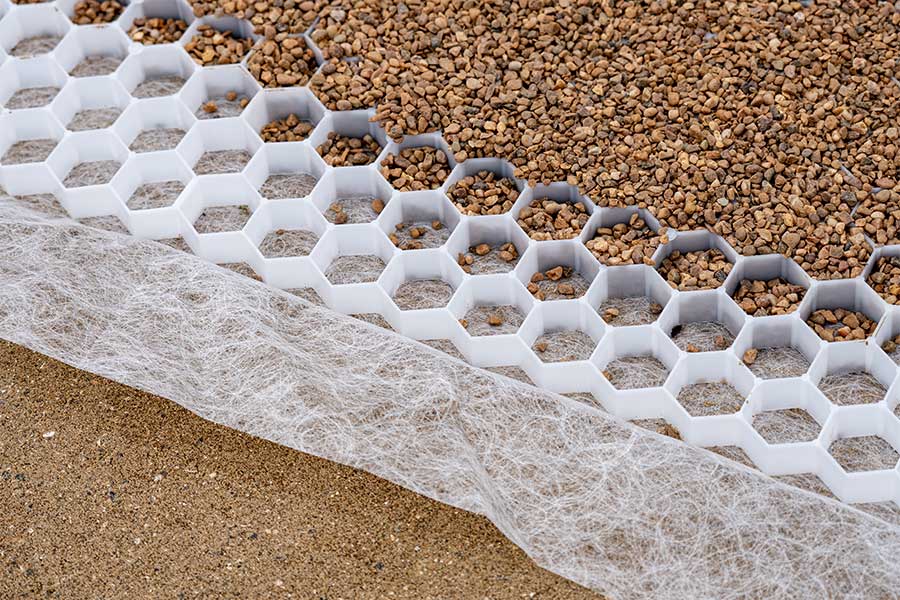
For gravel driveways and more substantial paths, you should lay around 75mm of MOT Type 1 as a sub-base before adding the decorative aggregate. Compacting the sub-base with a whacker plate creates a firm, stable foundation that helps prevent the gravel from sinking or developing uneven areas.
For step-by-step advice on preparing the ground, laying gravel and keeping it looking its best, read our guide on how to build a gravel driveway. If you're still unsure how much sub-base material you'll need, our team will be happy to help.
Decorative aggregate installation guide
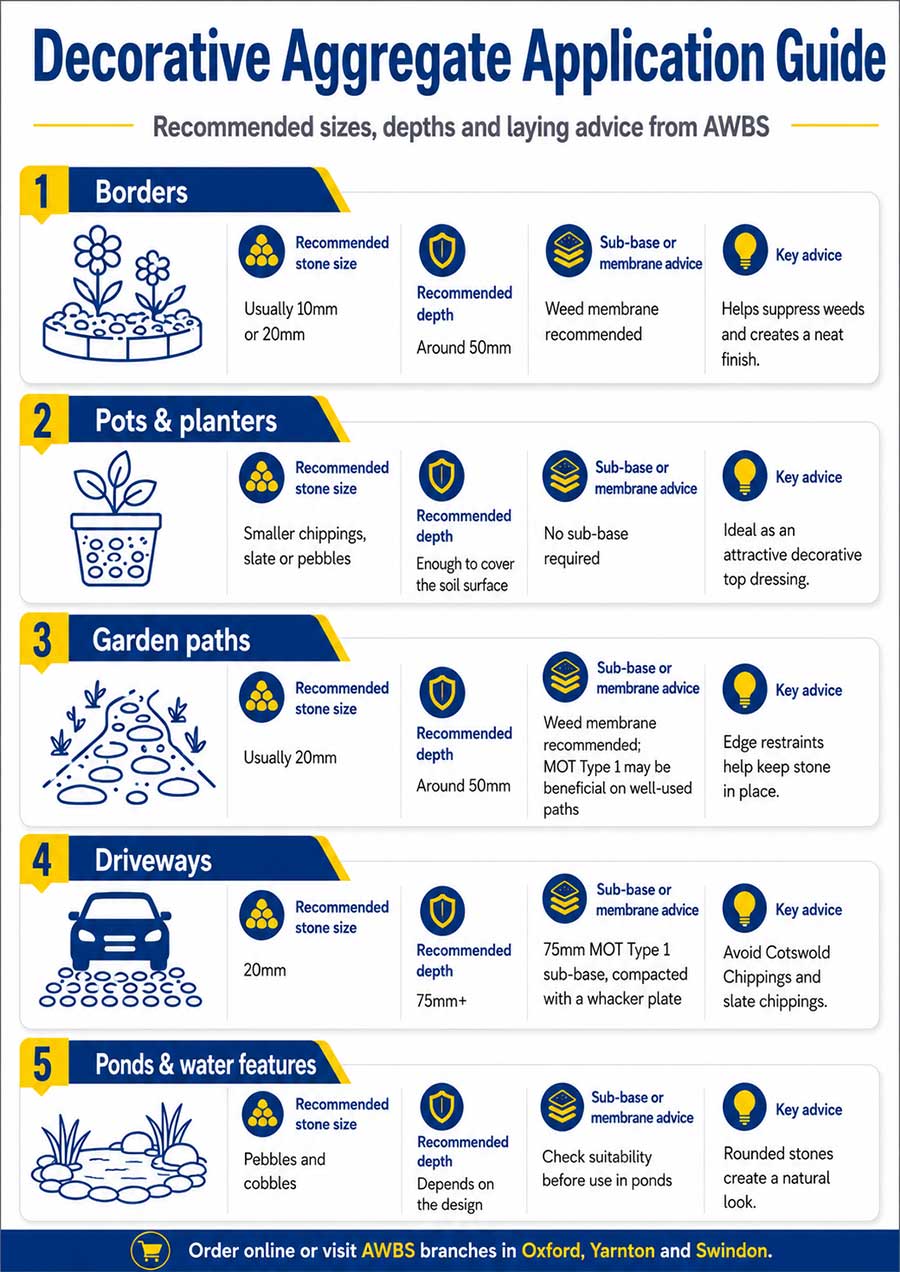
Common mistakes to avoid
From choosing the right stone to laying it correctly, good preparation and planning can make all the difference. Avoid these common mistakes.
- Choosing the wrong stone for a driveway – softer stones can gradually break down under regular vehicle use, while smaller chippings are more likely to stick in tyre treads. For best results, we’d suggest choosing a hard-wearing 20mm aggregate.
- Skipping the weed membrane – without a membrane, weeds can grow through the surface and soil may mix with the stone, leaving your gravel looking untidy and increasing maintenance.
- Laying gravel too shallow – a shallow layer can look patchy and shift more easily. Aim for around 50mm on borders and paths, and at least 75mm on driveways.
- Choosing white stone for a shaded area – white stone chippings like Arctic White create a striking contemporary look but can discolour more quickly in damp or shaded areas. Occasional rinsing and topping up the stone will help, but a darker colour may be a better long-term choice.
- Buying without seeing the stone first – decorative stones can look very different when wet or dry, and when bagged or laid. Visit your nearest AWBS branch to compare samples and view many of the products installed in the display areas.
Buying decorative aggregates from AWBS
Whether you need a few bags to refresh a border or a jumbo bulk bag for a larger project, AWBS stocks a variety of decorative aggregates for garden features, paths and driveways.
Most products are available in 23kg small bags, half bulk bags and jumbo bulk bags to suit projects of every size. Better still, all decorative gravel products are included in our 5 small bags for the price of 4 offer, with free local delivery available on all bag sizes.
While photos are useful, seeing decorative aggregates in person often makes choosing much easier. Pop into any AWBS branch to compare samples and explore our display areas in Oxford, Yarnton and Swindon to see many of the products installed in real landscaped settings. Although small sample bags aren't available, 23kg bags are ideal if you'd like to try a product at home before ordering a larger quantity.
Browse our full range of decorative stone online, or visit your local AWBS branch to compare colours, sizes and finishes in person. If you need help finding the right product for your project or deciding how much you'll need, speak to our knowledgeable team for advice.