


Garden Path Ideas: Which Material is Best?
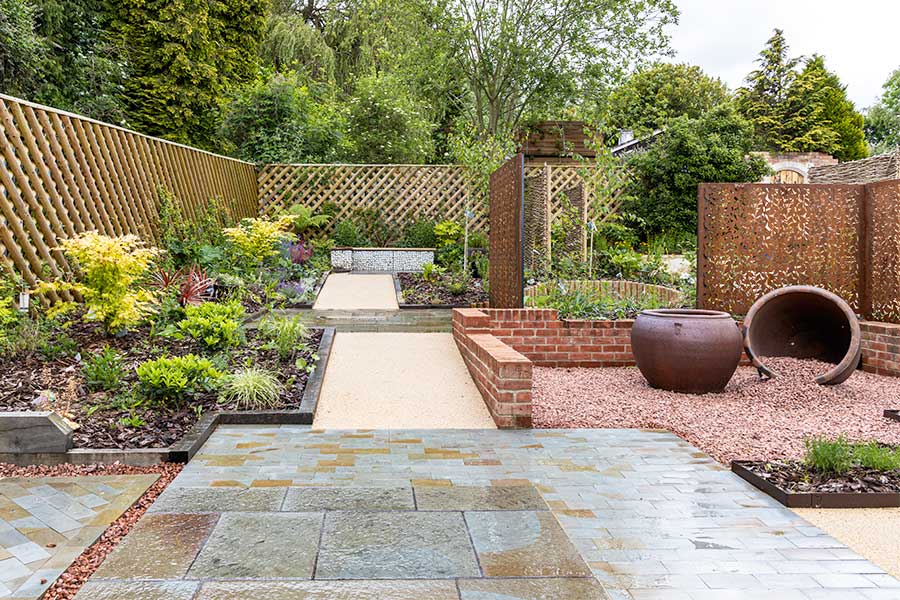
Looking for garden path ideas? The material you choose will influence not only how it looks, but also how much maintenance it needs and how well it copes with everyday use. From practical front paths to informal walkways linking different parts of your garden, selecting the right material will ensure your path complements your space, needs, and performs well over time. From gravel and paving slabs to stepping stones and bark, there are plenty of options to choose from. Read on to discover some of the best garden path ideas and where each material works best.
Garden path materials: where should you start?
Before you start comparing materials, think about what you need the path to do. A route that's used regularly to reach your front door has very different requirements to a winding trail across the lawn to your greenhouse. Tom Budden of AWBS recommends:
"A busy front path or access route needs a different level of durability and usability compared to an occasional route through a garden border. Once you know how the path will be used, it becomes much easier to select an appropriate material."
Other factors you should consider include drainage, the amount of upkeep you're happy to carry out and the overall style of your garden. Answering these questions first will make it much easier to find a material that is practical, appropriate and aesthetically pleasing.
Gravel paths
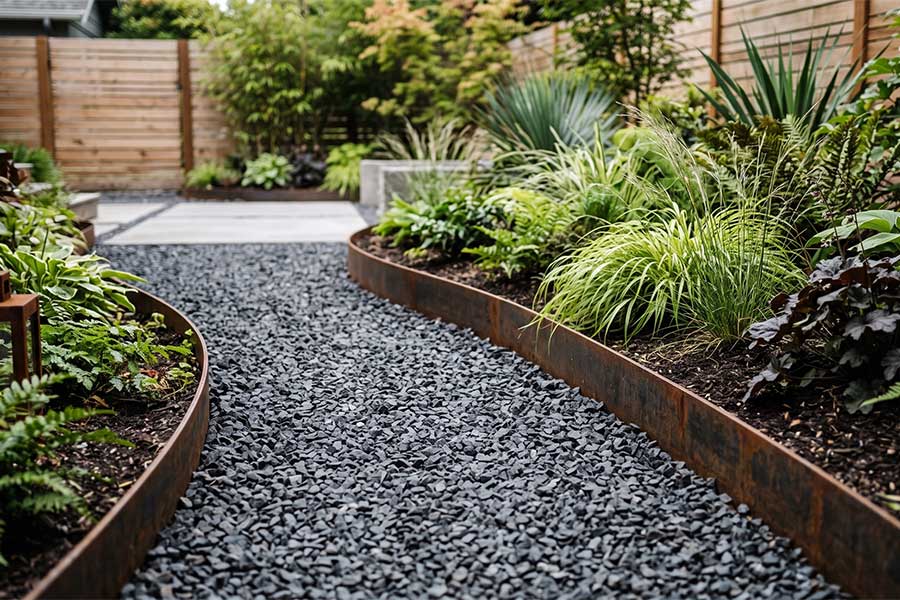
Decorative gravel is a tried-and-tested material for garden paths, offering an attractive, budget-friendly finish that suits everything from front paths to informal garden walkways. Better yet, gravel is naturally free-draining, which helps to prevent standing water after heavy rain. And it’s also relatively straightforward to install, making it suitable for DIY projects. With a wide choice of colours, sizes and textures, it's easy to find a style to suit your existing landscaping.
For a traditional loose gravel path, 20mm stone is generally the best choice. It creates a firmer surface underfoot than smaller aggregates and is less likely to be displaced when walked over. We’d recommend laying gravel to a depth of 50mm over a suitable sub-base and using a weed membrane to reduce maintenance and keep your gravel cleaner for longer.
Garden path edging is also key for keeping gravel contained. Edging stones will prevent it from spreading into borders or across your lawn, while creating a neat, finished look. Block paving, kerbs and metal edging are all effective options, depending on your preferred style.
AWBS stocks a wide range of decorative gravels suitable for garden paths. Local Shingle is a versatile all-rounder with a blend of warm Cotswold buff tones. Meanwhile, Mortimer Flint and Black & White Flint are both hardwearing flint gravels that add natural colour and texture.
For busier paths and sloping gardens, Core Path Pro gravel pathway grids are well worth considering. The interlocking honeycomb structure helps hold the gravel in place, reducing movement and creating a more stable surface for wheelchairs and pushchairs. The grids also include a built-in weed membrane, so there's no need to install a separate one beneath them.
When using Core Path Pro, go for a smaller aggregate of around 10mm so it sits neatly within the grid cells. Gold Flint is a great choice for a more traditional finish, while 9-12mm Arctic White offers a bright, contemporary look.
Stepping stone paths
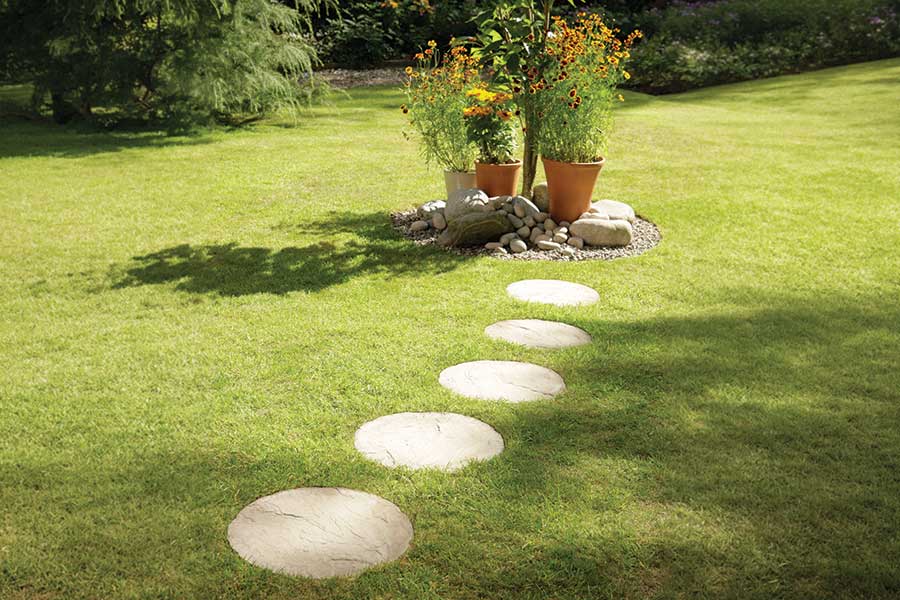
Want to improve access around your garden while maintaining a natural look? Stepping stone paths are perfect for informal gardens, protecting lawns and planting from regular foot traffic and reducing muddy patches without the need for a fully paved path to lesser used areas.
Whether laid across a lawn or set within gravel or bark chippings, stepping stones provide a simple, low-maintenance way to create an inviting garden path. And because only small sections of the ground are covered, they’re often more affordable than paving the entire route.
At AWBS, we stock a range of stepping stones to suit different garden styles. Bradstone Natural Sandstone and Limestone stepping stones offer the character of natural stone and pair well with matching paving. Or if you prefer the lived-in look, Bradstone Random stepping stones add texture, while Stonemarket Timberstone replicates softer timber in robust concrete format.
Paving slab paths
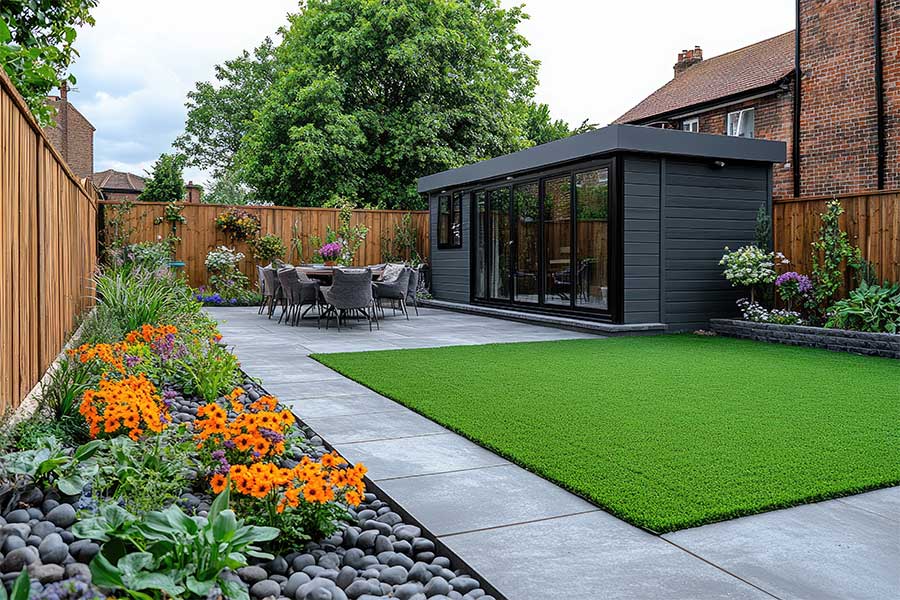
For garden paths that see regular use, paving slabs are one of the most durable and versatile choices. They create a solid, level surface that's ideal for front paths, side access and links between patios and other areas of the garden. There are numerous paving colours and materials available, with styles to complement almost any property, from cottages to new builds. They're also an excellent choice if you want your garden path to tie in with your patio.
If you're creating a simple path, it's often worth choosing individual paving slabs rather than a full patio pack that we’d recommend for a patio or shed base. Tom Budden of AWBS explains:
"For many garden paths, single-size paving slabs are more practical because customers can buy just the number of slabs they need. This makes them ideal for smaller projects, simple path layouts or adding a few extra slabs to complete an existing pathway."
Natural stone paving
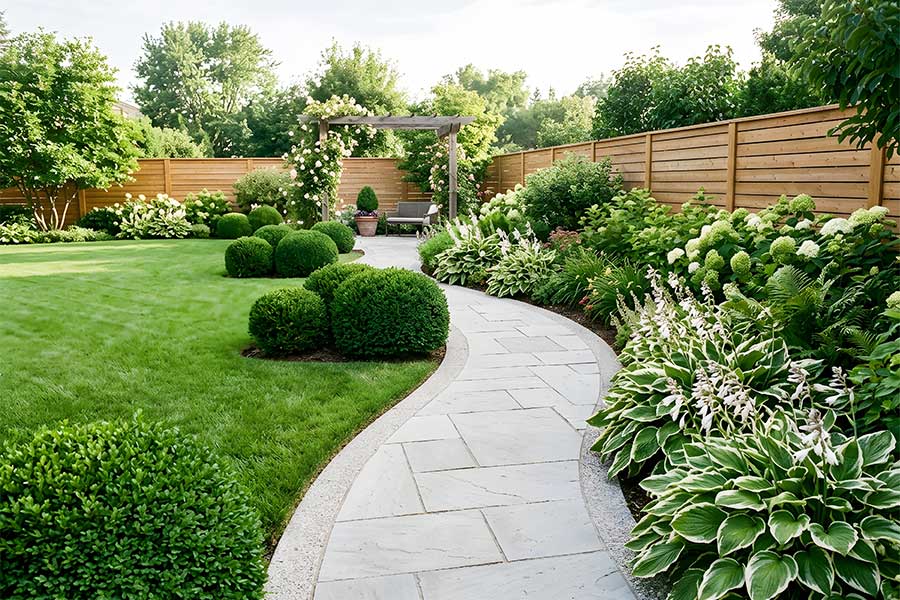
Natural stone paving is the obvious choice if you're after a more traditional or rustic look. Its riven surface and subtle colour variation give every path its own character, making it a great fit for period properties, cottage gardens and informal planting schemes.
The AWBS Exclusive range includes individual sandstone paving slabs in a variety of colours, from the warm creams and buffs of Desert Sand to the earthy tones of Meadow Blend and the contemporary greys of Stone Grey. Or for a darker finish, Noire Limestone and Brazilian Slate provide an elegant alternative for modern homes. We also have our new for 2026 Sinai Pearl limestone paving, offering a lovely cream colour with attractive fossil flecks.
Porcelain paving
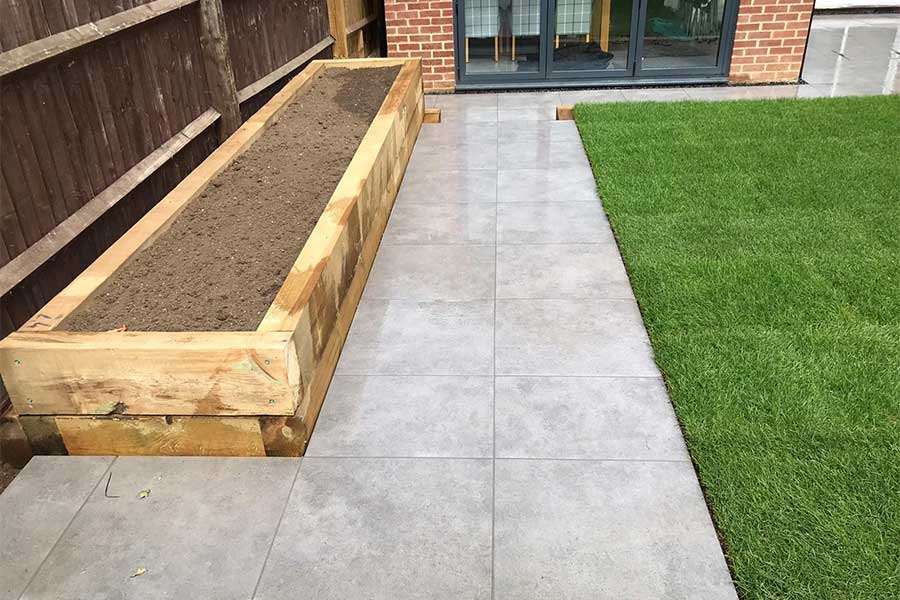
If you’re hoping to achieve a more contemporary finish, porcelain paving slabs are a great option. Its clean lines and consistent appearance create a crisp, modern look, while its hard-wearing surface is resistant to fading, scratching and staining.
Our stone-effect porcelain designs combine the look of natural paving with easier day-to-day care, while wood-effect styles capture the warmth of timber without the upkeep. Digby Stonerock recreates the texture of natural stone in modern colours, while Pavestone Dolomite features large-format slabs with authentic stone-effect finishes for a smart, high-end finish.
Block paving paths
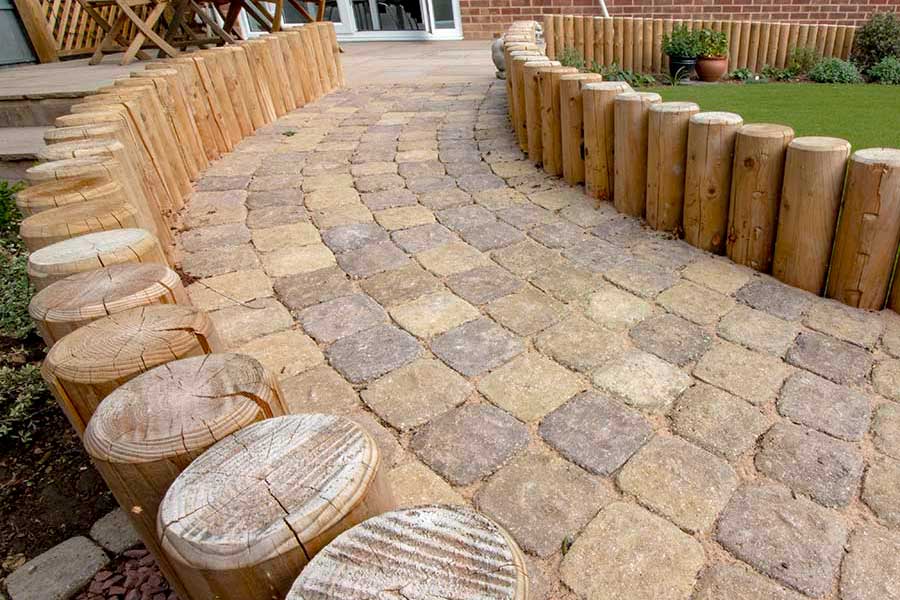
Although block paving is most commonly used for driveways, it's equally effective for creating long-lasting garden paths. The smaller individual blocks make it easy to create straight or curved layouts, while providing a hard-wearing surface that's ideal for front paths, side access and other well-used routes around the garden. Tom Budden of AWBS says:
"Block paving works well for garden paths, especially where the path leads from a block paved driveway and the customer wants a consistent look. It is also a good choice for creating patterns and adding more visual interest than larger paving slabs."
Another advantage of block paving is that individual blocks can be lifted and replaced if repairs or maintenance are ever needed. Some ranges are also available in permeable designs, helping surface water drain away more effectively.
At AWBS, we stock block paving to suit all types of gardens. Bradstone Piccolo Setts recreate the appearance of traditional Dutch clay pavers in durable concrete and come in both warm terracotta and modern grey shades. Meanwhile, Brett Alpha Trio offers a more rustic, cobbled look and granite-inspired Brett Lugano Trio pavers pair well with contemporary landscaping.
Resin-bound garden paths
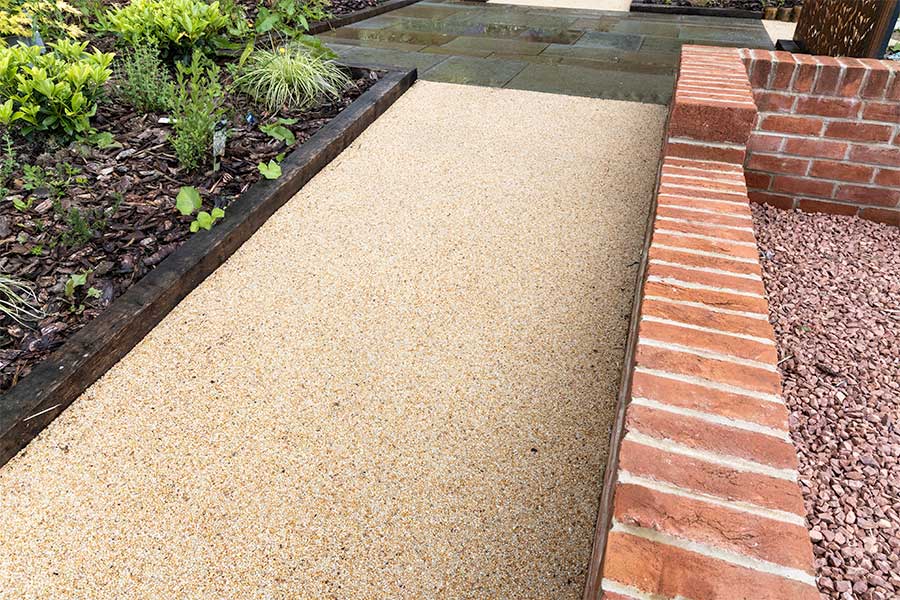
Resin-bound surfacing provides the visual appeal of gravel without the movement underfoot. The stones are bound together with resin to create a smooth, stable surface that's easy to maintain and suitable for wheelchairs and pushchairs.
As well as creating a neat finish, resin-bound paths are available in a variety of natural stone blends and colours to slot seamlessly into any garden design. They're particularly well suited to front paths, entranceways and other areas where a clean, high-quality finish is a priority.
Tom Budden of AWBS says:
"When installed on the right sub-base, resin-bound gravel is also permeable, which helps with drainage. However, it requires specialist equipment and experience, so we recommend professional installation rather than treating it as a DIY project."
At AWBS, we stock two premium resin-bound surfacing systems from Addagrip. Stonebound uses a finer aggregate to create a sleek, contemporary finish, while Terrabase Rustic features larger aggregate blends for a more natural, textured appearance in more established settings.
Bark and woodchip paths
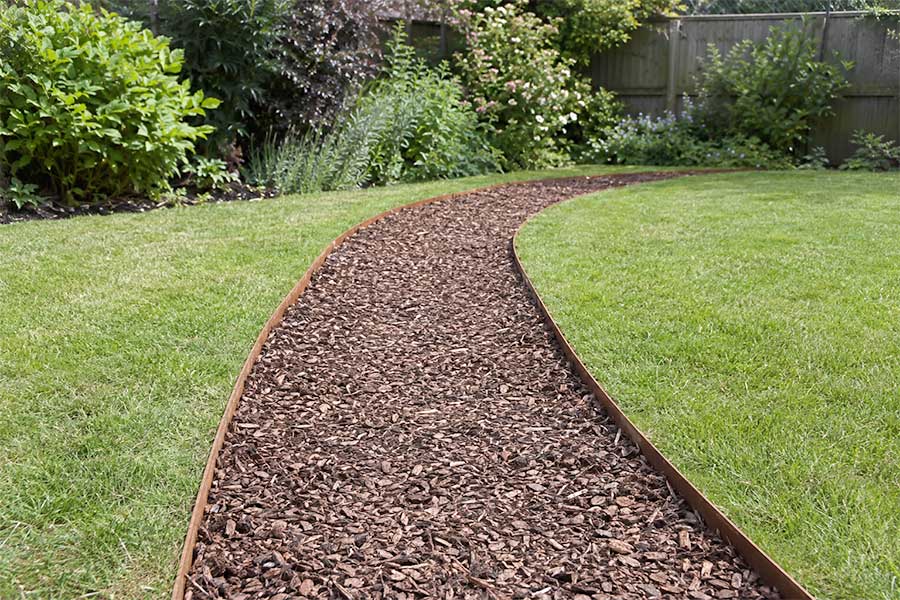
If you're aiming for a more natural-looking garden, bark and woodchip are an attractive alternative to gravel or paving. Their softer appearance helps paths blend into the surrounding landscape, making them a good choice for woodland gardens and informal planting schemes.
They're also among the more affordable garden path materials and are relatively easy to install. For the best results, lay bark or woodchip over a weed membrane to help suppress weeds and prevent it from mixing with the soil below. A depth of around 100-150mm will provide good coverage and a comfortable surface underfoot.
Unlike stone or paving, bark and woodchip will break down over time, so they'll need topping up every so often to keep the path looking its best. However, many homeowners see this as a worthwhile trade-off for the softer, more natural finish.
We can supply a range of products suitable for bark and woodchip paths, including Melcourt Softwood Playchips and Rolawn Play Grade Bark. Both create a hardwearing, free-draining surface, while Rolawn Play Grade Bark can also be used as decorative mulch around plants.
Garden path edging ideas
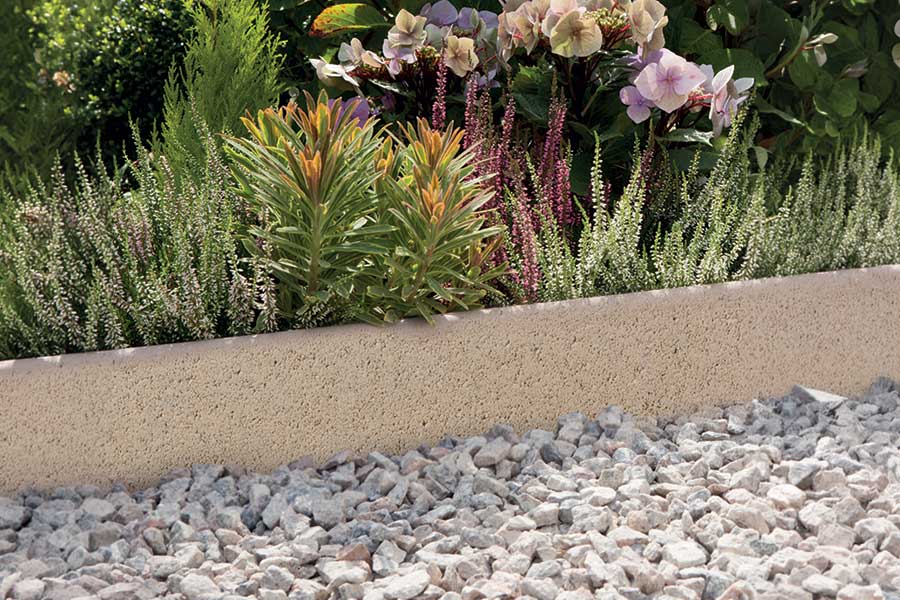
The right garden path edging does more than create a neat and tidy finish. It helps keep loose materials such as gravel and bark contained, preventing them from spreading into surrounding lawns and borders and making the path easier to maintain. Edging can also be used alongside paving and resin-bound surfaces to add definition and create a cleaner transition.
We have several options depending on your preferred style. Standard Path Edging Stones are simple and cost-effective, while Bradstone Round Top Edging is timeless and Bradstone Scalloped Edging Stones add a little more character. Another stylish option is our Core Edge metal edging, available in various heights and colours including a lovely pre-rusted finish.
If you've chosen paving or resin-bound surfacing, setts or contrasting block paving can also be used to frame the path. We stock granite, sandstone and porcelain designs to match your paving and create a coordinated finish.
Which garden path material is right for you?
With so many garden path materials available, the best choice will depend on how the path will be used, the style of your garden and the amount of maintenance you're prepared to carry out. Here's a quick summary to help you compare the different options:
|
Garden path material |
Best suited to |
|
Gravel |
Budget-friendly paths with a natural finish that suit both traditional and contemporary gardens. |
|
Gravel with Core Path Pro grids |
Well-used routes, sloping gardens or areas where a firmer, more stable gravel surface is needed. |
|
Stepping stones |
Informal paths across lawns, gravel or bark where occasional access is needed. |
|
Natural stone paving slabs |
Traditional and rustic gardens, particularly where you want to complement an existing patio. |
|
Porcelain paving |
Contemporary gardens where a sleek, durable, low-maintenance surface is preferred. |
|
Block paving |
Front paths, side access or paths leading from a block paved driveway. |
|
Resin-bound surfacing |
Premium paths with a smooth, seamless finish and very little ongoing maintenance. |
Shop garden path materials at AWBS
Whether you're creating a simple stepping stone path or transforming your entire garden, choosing the right materials will help ensure your path looks its best and stands the test of time. AWBS stocks a host of garden path materials, including decorative gravel, Core Path Pro pathway grids, stepping stones, paving slabs, block paving, resin-bound surfacing, bark, woodchip and path edging, so you can source everything you need in one place.
If you'd like to compare materials in person, why not pay a visit to one of our branches in Oxford, Yarnton or Swindon? Our outdoor landscaping displays showcase paving, edging, gravel, block paving and resin-bound surfaces in realistic garden settings, making it easier to compare colours, textures and finishes before you buy.
Need advice? Our experienced team will be on hand to help you find the right products for your project. We also offer free local delivery, along with regular promotions, including 5 small 23kg bags of gravel for the price of 4 and free Groundtex membrane with selected bulk bags. Browse our website to learn more about our current deals or get in touch.
Garden Path Materials FAQs
What is the cheapest way to make a garden path?
Gravel, stepping stones and bark are usually the most affordable options. Gravel offers a durable surface for everyday use, while stepping stones are ideal for informal routes across lawns. Bark and woodchip are inexpensive too, although they'll need topping up over time.
What is the best gravel for a garden path?
For most gravel paths, 20mm gravel provides the best balance, as smaller aggregates move more and larger aggregates aren’t as comfortable to walk on. Popular AWBS gravel options include Local Shingle, Gold Flint, Mortimer Flint and Black & White Flint. If you're using Core Path Pro grids, choose a smaller aggregate of around 10mm for a smoother finish.
How deep should a gravel path be?
A gravel path should generally be laid to a depth of around 50mm over a suitable sub-base. This provides good coverage while creating a stable surface for walking over regularly.
Do you need a weed membrane under a gravel path?
Yes. A weed membrane helps reduce weed growth, prevents the gravel from mixing with the soil and keeps the path looking tidier for longer. If you're using Core Path Pro grids, a separate membrane isn't required because it's already built in for convenience.
Are gravel paths suitable for wheelchairs and pushchairs?
Loose gravel can be difficult to use with wheelchairs and pushchairs. For a firmer, more stable surface, try Core Path Pro gravel pathway grids with a 10mm aggregate to keep the gravel in place. Or you could consider upgrading to stable resin-bound gravel instead.
Can you use bark for garden paths?
Yes. Bark and woodchip are great for informal gardens, woodland areas and natural planting schemes. They create a softer surface underfoot than gravel or paving but will need topping up periodically as the material naturally weathers and breaks down.
How deep should bark be for a garden path?
For the best results, bark or woodchip should be laid to a depth of around 100-150mm over a weed membrane to help suppress weeds and keep the material separate from the soil.
What paving slabs are best for garden paths?
Individual paving slabs are often most practical as you can buy only the quantity you need. The AWBS Exclusive paving range includes sandstone options such as Desert Sand and Stone Grey, alongside Noire Limestone and Brazilian Slate, making it easy to find a style to fit your space.
Do garden paths need edging?
While not essential, garden path edging is highly recommended. It helps contain loose materials such as gravel and bark, while also giving paved, block paved and resin-bound paths a smart, defined finish.
What is the best low-maintenance garden path material?
Porcelain paving, resin-bound surfacing and block paving are all great low-maintenance options. Gravel requires occasional raking and topping up, while bark and woodchip typically need to be replenished more often as they naturally decompose.