


Top 7 Garden Design Trends For 2026: Paving, Decking & Landscaping Ideas
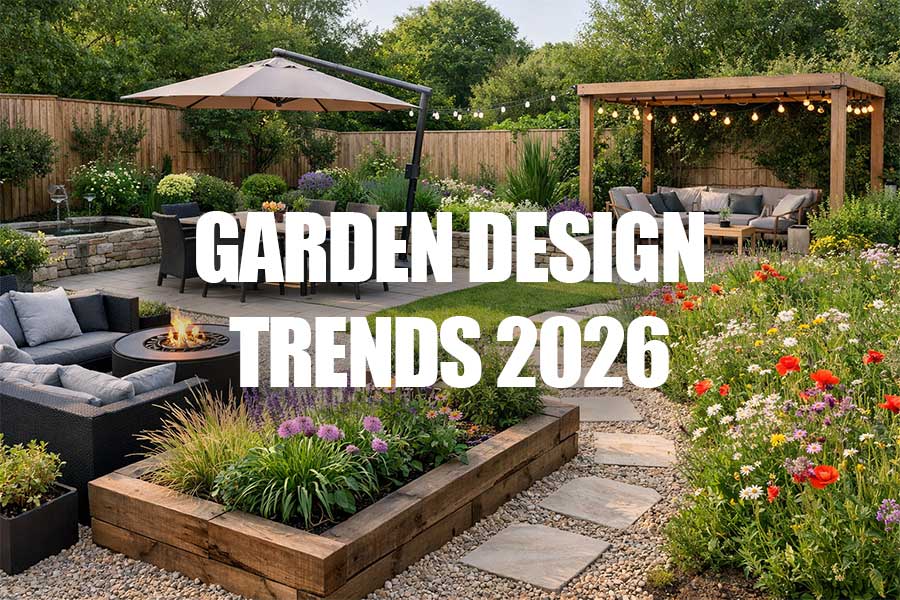
Planning changes to your garden in the new year? You may have noticed a move towards spaces that feel more natural and less manicured. Instead of rigid layouts and uniform finishes, gardeners will favour warmer tones, textured materials and relaxed planting styles.
This shift doesn’t mean gardens are losing definition. Paving, decking and gravel are still being used to create areas for different uses, but with softer transitions and a more relaxed feel. Read on to discover key garden design trends for 2026, and how landscaping materials are being used to support this balance, with ideas you can adapt for your own outdoor space.
The Big 7 garden landscaping trends for 2026
1. Outdoor rooms & purpose-driven landscaping
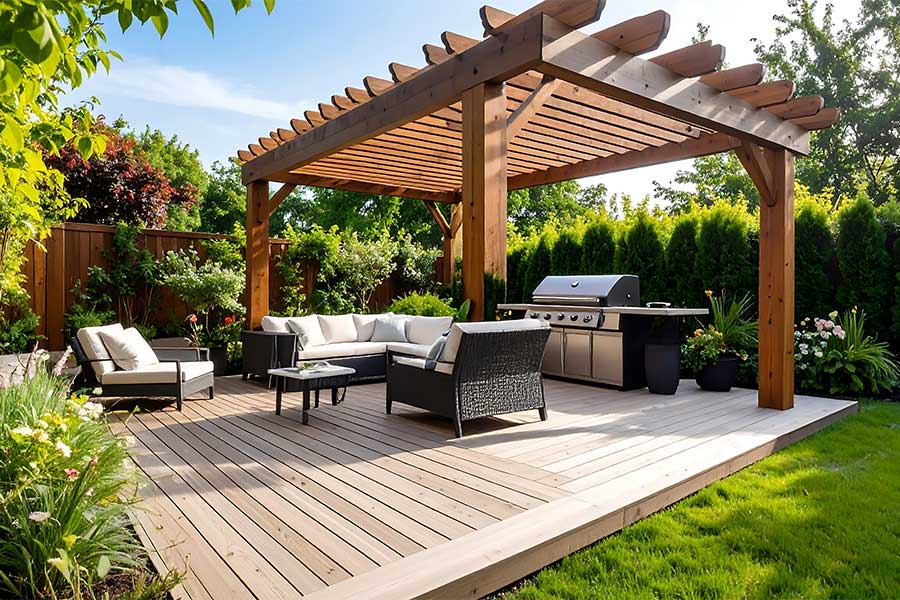
One of the main garden design trends for 2026 is the move towards gardens that feel more like an extension of the home. Rather than being treated as one open space, gardens are increasingly planned as defined outdoor ‘rooms’, shaped around how the space will be used.
Landscaping materials are key to giving these spaces structure. Paving provides a reliable, hard-standing surface for dining terraces, outdoor kitchens and seating areas. While decking can be used to introduce changes in level or to set apart more informal socialising areas.
To define garden rooms more clearly, without enclosing the space entirely, designers are making greater use of sleeper planters and low garden walls. Natural or reproduction walling stone can be used to create dwarf walls or retaining structures across different levels. Brick walls that complement house materials are also proving popular and give an architectural feel.
Alternatively, trellis panels or slatted fencing can be used to make certain areas more private, without blocking light. For instance, seating areas and reading nooks. They also provide support for climbing plants – perfect for softening boundaries and adding colour and depth.
2. Mixed material hardscapes
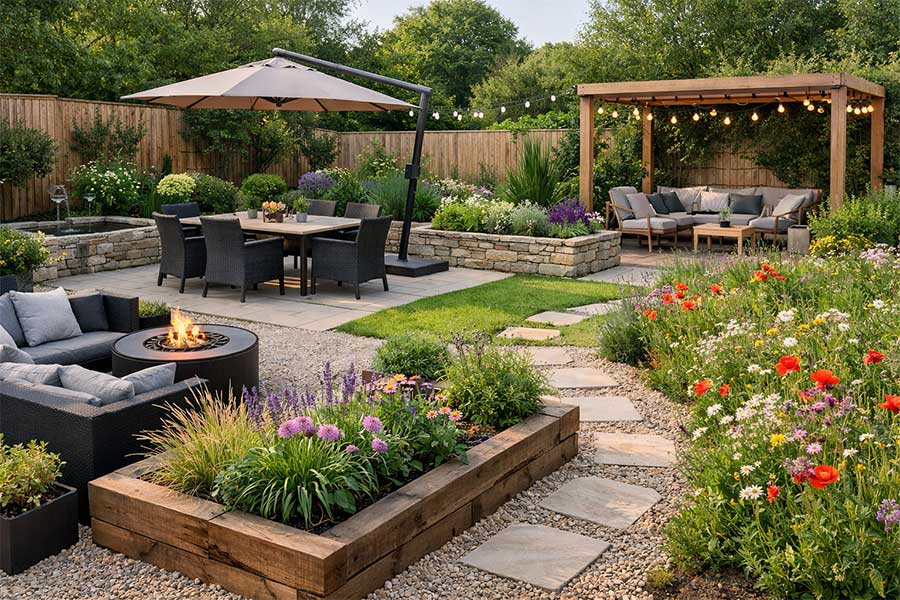
Rather than aiming for a uniform finish, modern garden designs now feature a mix of materials to create a softer, more natural look. Combining paving with gravel, decking and decorative stone allows different areas to feel distinct while still flowing naturally into one another.
Stepping stones, for example, can link patios with lawns or planting, while gravel paths work well between garden rooms or play areas. Where materials meet, edging stones can be used subtly to keep loose surfaces in place without making the layout feel too rigid.
Natural finishes sit at the heart of this approach. Paving slabs with texture and variation, such as riven Indian sandstone, complement less formal planting schemes. For a similar finish with fewer maintenance needs, stone-effect porcelain paving is a practical, long-lasting alternative.
Gravel and decorative stone help reinforce this softer style, from pathways and borders to feature areas. Using a mix of materials like flint shingle, slate chippings and rounded pebbles will introduce contrast and colour, but it’s best not to overcomplicate things. Limiting the number of materials and choosing complementary tones will help keep the design cohesive.
3. Timber decking & multi-level zones
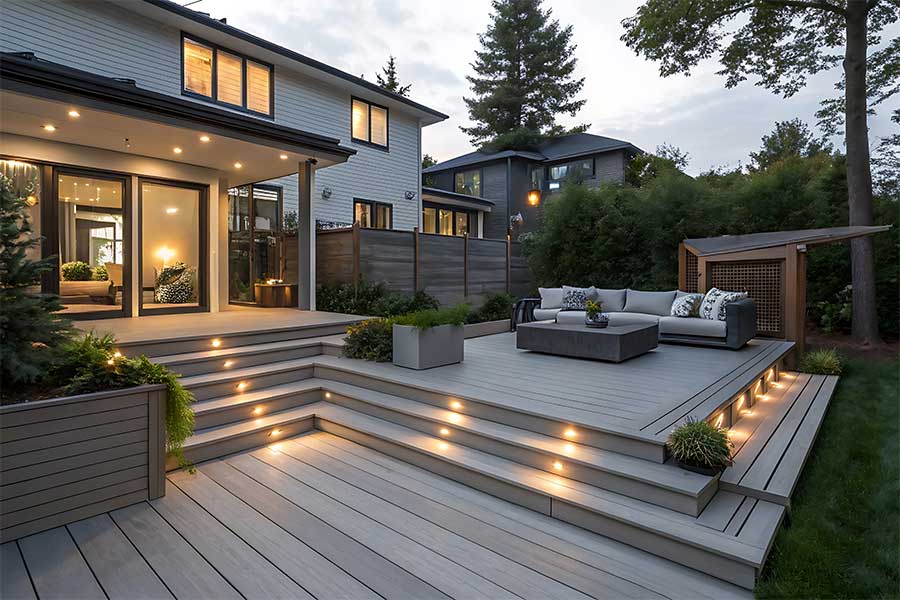
Garden design in 2026 will see decking being used more deliberately as part of tiered and split-level layouts. Raised platforms help manage changes in height within sloping gardens and create spaces that feel better connected. Details like integrated steps are key to making these layouts work well, allowing easy movement between decking, lawns and paved areas.
There are two main decking options to consider: timber or composite. Our grooved redwood timber decking offers a natural appearance that blends easily with planting and suits relaxed, informal layouts. It is also pressure-treated to improve durability and longevity.
Composite decking provides the look of real wood without common issues such as rotting, fading or becoming slippery over time. NewTechWood’s UltraShield Essentials range offers a more affordable composite option with realistic wood-grain finishes, while Millboard and Trex provide premium solutions known for their durability, slip resistance and long-lasting colour.
Timber and composites are also being used beyond decking. Adding cladding to raised beds, planters and garden walls will help to soften hard landscaping and unify multi-level spaces.
4. Statement walling & raised beds
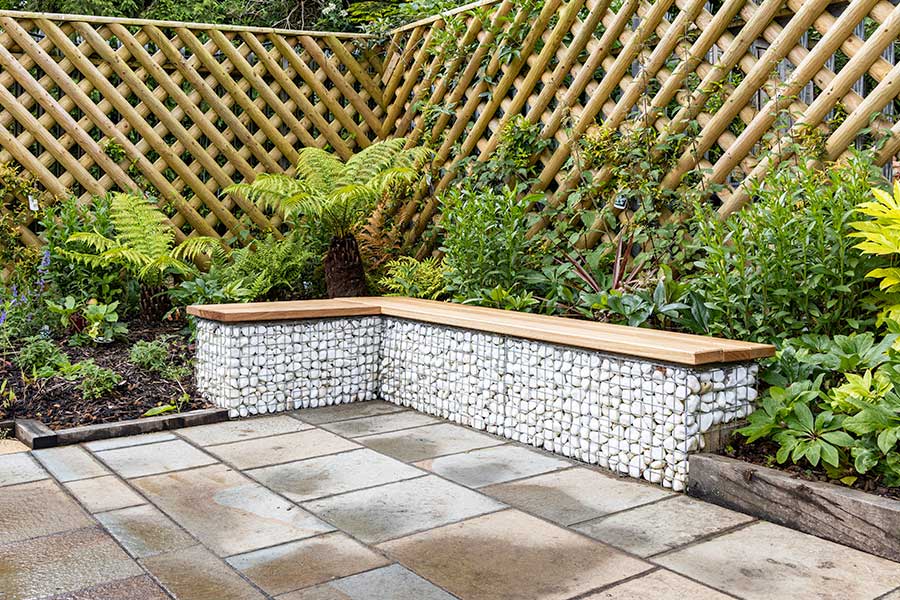
In the new year, walls and raised beds will be treated as design features in their own right. Rather than purely practical elements, they can be used to add structure, contain planting and create strong visual anchors within your garden.
Gabion walls, made from stone-filled cages, are appearing more frequently as retaining features, seating backs or focal points. Filled with larger rocks, cobbles or decorative pebbles, they offer a textured, architectural alternative to traditional walling and slot seamlessly into contemporary garden designs. Want to upgrade your existing walls? Explore ideas here.
Retaining walls remain an essential part of terraced and sloping gardens, helping to level areas while adding depth and definition. We can supply walling stone in various colours and for projects of all sizes. We also have a range of brick types available, including engineering and facing bricks in multiple colours to suit both modern and more traditional garden designs.
Planting can then be layered around these structures. Sleeper raised beds are often used for edible gardens or mixed borders, whether built from our popular new softwood sleepers for a cleaner look or reclaimed sleepers for a more rustic feel. In tighter spaces, trellis systems and tiered planter arrangements help introduce planting vertically. Meanwhile, stacked planter walls built from timber or stone allow planting to be spread across different heights for greater visual interest.
5. Climate-resilient edges & wild plant zones
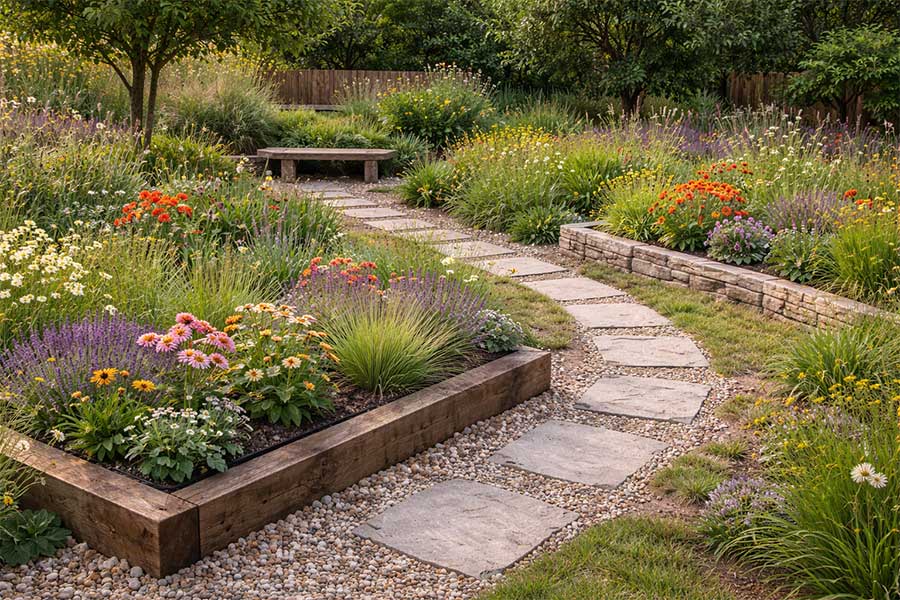
As garden design trends become less formal, hard landscaping is being used to support more natural planting. Softer lawn edges, loose paths and informal borders help gardens cope better with changing weather, while ensuring spaces are still easy to manage.
Stone edging, sleeper borders and gravel detailing are often used to shape wild plant zones without containing them too tightly. These features allow meadow-style planting to spread naturally, while still giving structure to the garden. Sleepers work particularly well around pollinator beds, helping to protect areas designed for bees, butterflies and other insects.
Stepping stones or timber sleepers can also be installed to allow movement through planted areas for maintenance and help guide foot traffic through the garden without the need for solid paths. Set into grass or gravel, these routes feel informal and in keeping with wilder planting.
Gravel also has a practical role beyond pathways. Used as mulch around plants, decorative gravels and stone chippings help retain moisture, reduce weeds and deter pests, while adding texture and contrast. This makes them a useful choice for gardens that aim to look relaxed and natural but still need to perform well through wet winters and dry summers. A cost-effective alternative is to use wood chip mulch, which still looks good while retaining moisture and supressing weeds.
6. Front garden landscaping & multifunctionality
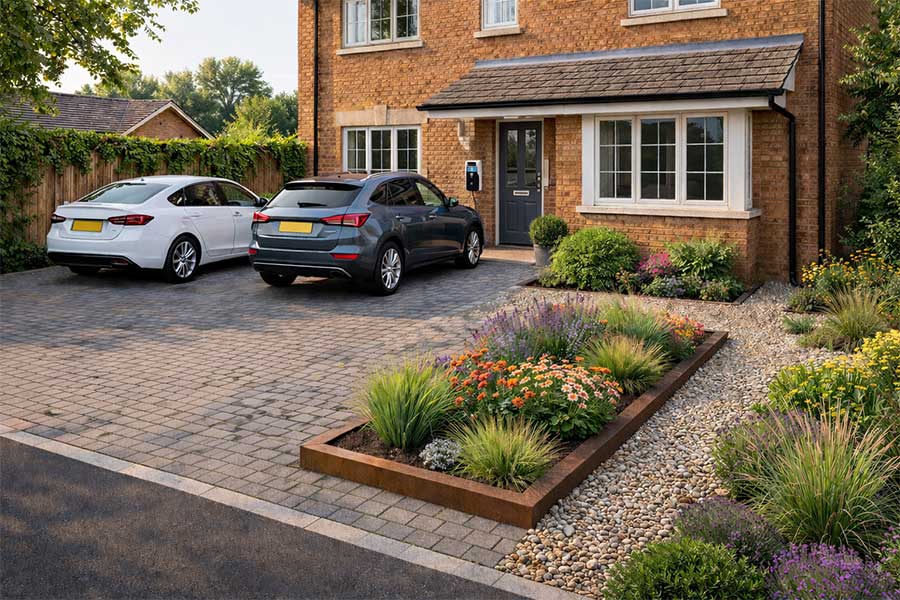
One of the more practical garden design trends for 2026 is the shift towards front gardens that balance kerb appeal with everyday function. Rather than being purely decorative, they are being designed to accommodate parking, EV charging points and well-planned planting areas.
With sustainability and water management at the forefront of many people’s minds, permeable surfaces are growing in popularity. Materials such as permeable block paving and gravel allow rainwater to drain naturally into the ground, helping to manage surface water during periods of wet weather. Systems like Omega Flow block paving are particularly well-suited to areas liable to surface water or where higher drainage capacity is needed.
When used for driveways, loose gravel is best laid with stabilisation grids and edging stones to keep the surface secure when driven or walked over. Or we can supply resin bound gravel by Addagrip to create a smooth, fixed surface that is permeable, accessible and easy to maintain.
Planting and privacy also remain key considerations. Sleeper borders can be used to edge planting beds and redirect water run-off, while feature retaining walls can be used for raised planting. For added privacy, timber fencing with lattice panels or trellis screening works well. Together, these elements allow front gardens to be both functional and visually appealing.
7. Rich material palettes & ‘Quiet Luxury’
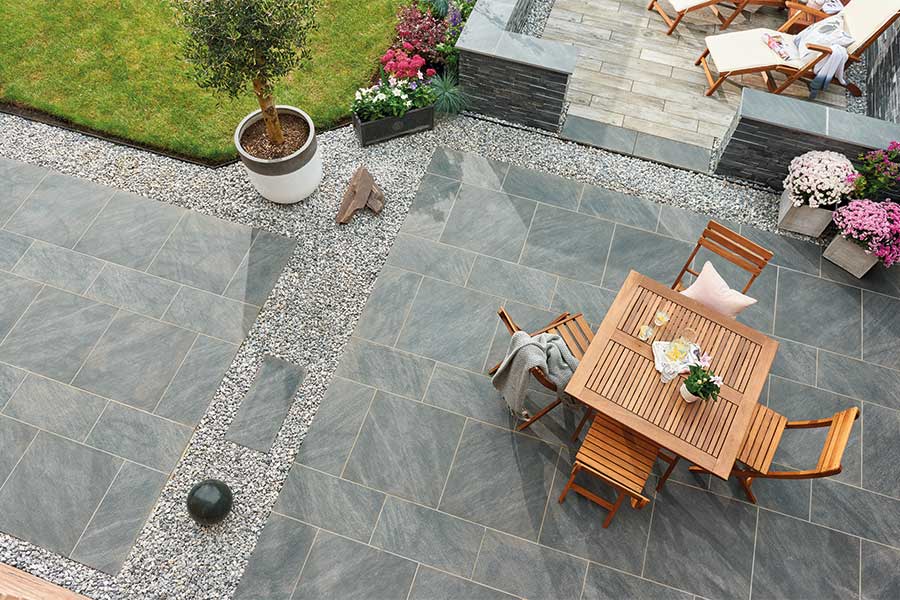
Next year, garden materials will shift towards richer colour palettes that focus on depth and texture. Paving, decking and stonework favour darker tones and warmer finishes that sit comfortably alongside planting, rather than competing with it.
Darker paving plays a key role in this look. Charcoal and anthracite slabs can be paired with lighter stone or gravel to create contrast without overwhelming your space. Porcelain options like Pavestone Amalfi in anthracite or Bradstone Mode Profiled Graphite suit contemporary gardens. Or you might prefer the warmer tones found within our AWBS Exclusive sandstone range, including buff, brown and terracotta shades, for a softer, more traditional finish.
Planting schemes are moving in the same direction too. Richer colours, including deep purples and reds, are being used alongside plenty of green foliage to create layered, calming backdrops. These tones work particularly well against darker paving and stone, helping planting and hard landscaping feel more connected. Want to add more to your space? Browse an array of plants to suit your space at neighbouring Oxford Garden Centre.
Deep-toned decorative gravel also supports this style. Options such as black granite, blue-grey limestone chippings and plum slate work well for paths, borders and feature areas. Used alongside stone or timber, these gravels add texture while keeping the overall look balanced.
Lastly, timber finishes will continue to feature, and the good news is that they don’t necessarily need lots of maintenance. Modern alternatives like composite decking and cladding boards provide a durable alternative to real wood. We also stock wood-effect Pavestone Crosswood Buff porcelain paving which has an authentic appearance and is sold in 1200x300mm plank formats.
Order landscaping supplies online or in-store at AWBS
Together, these garden design trends highlight a move towards outdoor spaces that are inviting, practical and perform well over time. If you’re looking to refresh your outdoor space, AWBS stocks a variety of landscaping materials to suit different styles and requirements.
Browse options online or visit our branches in Oxford, Yarnton or Swindon. Our team will be happy to offer advice and we also offer free local delivery within 25 miles, regardless of order value.