


How to Prepare Your Lawn Mower & Grass for Winter

Lawn care doesn’t end with the last cut of the year. As temperatures drop, both your lawn and your lawn mower will benefit from some care and attention. In fact, proper preparation for the colder months protects your grass, prevents mower damage and sets you up for a stress-free spring. So, if you’re wondering how to prepare your lawn and lawn mower for winter, look no further.
This guide covers the key steps, with practical advice for maintaining your equipment and keeping your lawn healthy. We’ve also included some expert tips on mower servicing and storage from Michael Meadham of Meadhams Garden Machinery in Kidlington. From simple checks to essential maintenance, here’s how to winterise both your mower and your lawn…
7 tips for preparing a lawn mower for winter
The main benefit of winterising your lawn mower is extending its lifespan. Doing so reduces the risk of rust and corrosion, helps you avoid costly repair bills, and keeps it running smoothly so it’s ready for next season. Learn how to prepare your lawn mower for winter below.
1. Clean your mower thoroughly

Before putting your mower away for winter, give it a thorough clean. Grass cuttings – and the phosphates they release – are corrosive, so brush off all grass and dirt from the upper deck and the cutting deck. It is advisable to drain the fluids from petrol mowers before turning on their side to access the underside of the cutting deck Then use a mild detergent to loosen and wash off any dried debris in hard-to-reach areas. Make sure the mower is fully dry before storing it to limit any rusting.
Once clean and dry, if your mower has a steel deck, consider painting the underside to protect against rust and rot. You can also spray a light coat of WD-40 onto the upper deck and wipe away any excess. This helps to repel moisture and adds an extra layer of protection for winter.
2. Drain or stabilise the fuel (Petrol mowers only)

Did you know that petrol deteriorates if left for long periods? Furthermore, modern E5 and E10 petrol has a higher ethanol content. As a result, they absorb moisture more easily, causing the fuel to emulsify and crystallise, clogging the carburettor and fuel system. Michael Meadham of Meadhams Garden Machinery highlights the issue and what to do:
“Around 7 out of 10 petrol mowers we now see have a clogged fuel system due to water in the fuel – this used to be just 1 in 10! To avoid this, we suggest using a good quality fuel stabiliser throughout the year and then draining the fuel from your mower before storing over winter.”
To protect the engine, either run your mower dry before storing it or drain the fuel from the tank. The other option is to use a fuel stabiliser year-round to prevent moisture buildup and keep the system clean – your local garden machinery specialists will stock them. If you do store fuel in your mower over winter, start it and let it run for a few minutes once a month.
3. Change the oil – petrol mowers
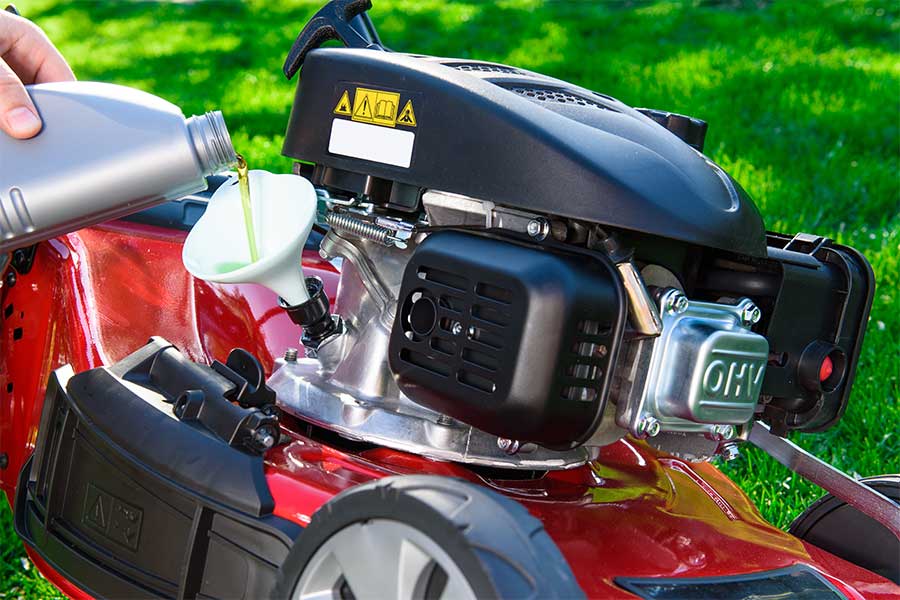
Changing the oil before storage is an important part of winter lawn mower maintenance. Old oil can thicken and degrade in cold weather, which may affect your machine’s performance in spring. If you plan to tackle the job yourself, you can buy service kits for petrol mowers from garden machinery specialists and some garden centres. Just make sure you use the correct oil for you brand of mower. Or, if you’d prefer the help of a professional, book a mower service with your local garden machinery specialist – more on the benefits and costs shortly.
4. Cordless electric and battery start mowers – battery protection
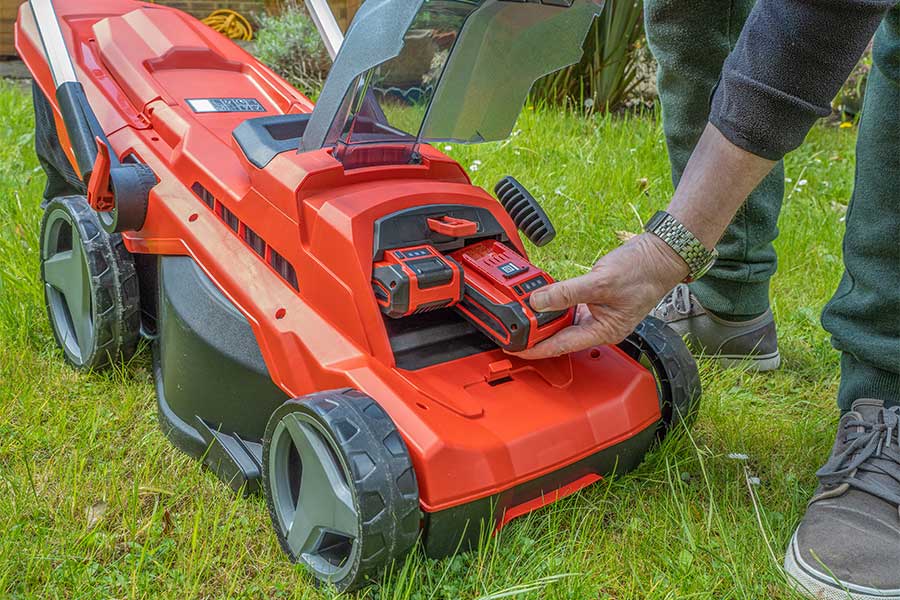
Batteries deteriorate quickly in cold conditions, so you should remove them from your lawn mower before it goes into storage. Leaving a battery in a cold shed or on a garage floor can shorten its lifespan, cause it to lose charge or fail altogether.
Instead, Michael Meadham advises: “Remove the battery from your mower and fully charge it before storing it inside, off the floor, in a warm place over winter.” This simple step will keep your mower’s battery in good condition for much longer.
5. Sharpen or replace the blade

Sharpening the blade is an important part of preparing your lawn mower for winter, but it’s a step that often gets overlooked. A sharp blade cuts cleanly and helps keep your lawn healthy, while a blunt one tears the grass, leaving ragged edges that are more prone to disease and browning. Dull or damaged blades also force the mower to work harder, and if a blade becomes unbalanced, it can put unnecessary strain on the bearings and engine.
Having cleaned your mower for storage, now is the best time to check the condition of the blade. If the blade is blunt but in good condition, you should be able to sharpen it. If the blade is badly worn, bent or chipped, replace it now to prevent damage and ensure your mower is ready to go in spring.
6. Check and clean the air filter
Dirty air filters reduce engine performance by restricting airflow, which can make your mower harder to start and less efficient. As part of your winter lawn mower maintenance routine, check the air filter before storing your machine. You’ll need to replace any paper filters that are clogged or damaged. However, sponge filters can often be cleaned with warm, soapy water before drying and re-oiling, following the manufacturer’s instructions. A clean air filter will help the engine run more smoothly and protect it from dust and debris.
7. Store your mower in a dry, protected space

Proper storage is a vital part of winterising your lawn mower, helping to protect your machine from rust, damp and cold weather damage. Ideally, your mower should be kept indoors in a dry, sheltered place such as a garage, shed or outbuilding. Petrol mowers should always be stored flat, never on their side or at an angle, as this can cause oil to leak into the cylinder head and soak the spark plug.
If you have no choice but to store your mower outdoors, raise it off the ground and cover it with a thick, waterproof sheet to protect it from the elements. Michael Meadham suggests using a wooden pallet to keep your machine away from any ground moisture – especially if your storage area is prone to damp or flooding.
Want to upgrade your lawn mower storage? Our sister business, Oxford Garden Centre, sells a variety of sheds and garden storage to suit your outside space.
Professional lawn mower servicing

If you’re not confident carrying out maintenance tasks yourself, a local garden machinery specialist can service your mower for you. They will usually service other tools like trimmers, hedge cutters, chainsaws and strimmer’s too – just ask. A mower service typically includes:
- Cleaning your mower and inspecting for damage
- Changing the oil
- Replacing or cleaning the oil filter
- Checking the spark plug and ignition system
- Inspecting the blades and sharpening or replacing them
- Inspecting the carburettor and fuel system
- Lubricating moving parts
- Adding a fuel stabiliser
- Inspecting pulley and belts
- Testing to ensure your mower is running properly
Michael Meaden advises that a mower service will generally cost between £90-£150 for a petrol mower, and £50-£100 for an electric or cordless battery mower. Prices include standard consumables such as oil, but not replacement parts like belts or blades. Reputable specialists should inspect your mower first and let you know if any additional work or parts are required before going ahead.
Essential winter lawn care tips
Preparing your lawn before winter sets in will help it stay healthy through the colder months and encourage strong growth in spring. A few simple tasks now make a big difference when the weather warms up again.
1. Give your lawn a final autumn cut

Before temperatures drop, give your lawn one last tidy-up. Cut the grass slightly longer than usual – ideally around 2.5 to 4 cm – to help protect it from frost and reduce the risk of winter mould. Using your newly serviced mower for this final cut will also help, as sharp blades minimise stress and damage to the grass.
2. Aerate and dress your soil

Autumn and early winter can leave the soil compacted, which restricts water, air and nutrients from reaching the roots. Use a garden fork or aerator to relieve this compaction by creating small holes across the surface. This will improve drainage and encourage stronger root growth. After aerating, try applying a thin layer of good-quality topdressing soil to enhance the structure of the existing soil. Rolawn’s sand-based topdressing works well, as it aids water absorption, levels out uneven patches and adds nutrients to help boost your lawn’s resilience.
3. Apply autumn lawn feed
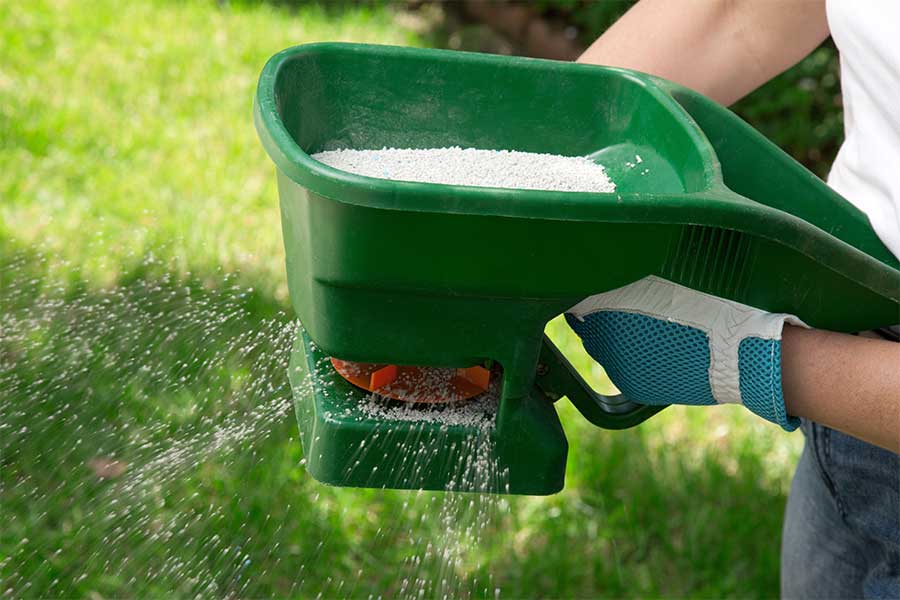
Feeding your lawn in autumn is a key part of winter lawn care, helping to establish strong roots and give the grass the nutrients it needs to cope with winter. This improves the turf’s resistance to cold, disease, weeds and moss, helping it recover and green up more quickly.
Westland SafeLawn is a natural option – ideal for homes with children or pets. It imparts slow-release nutrients and helps the lawn outcompete weeds and moss without harsh chemicals. Or, if you need a stronger weed-and-moss treatment, Westland Aftercut All in One greens and feeds the lawn, while tackling stubborn weeds and moss, with visible results in just one week.
4. Clear leaves and debris regularly

While a light scattering of leaves won’t do much harm, a thick layer can trap moisture, encourage mould and block sunlight from reaching the grass. Over time, this can weaken your lawn and stunt new growth. Use a rake or leaf blower to clear leaves regularly throughout the winter season. This will keep your grass healthy, dry and better protected against disease.
5. Avoid walking on frozen or waterlogged grass
Try to avoid walking on your lawn when it’s frozen or waterlogged, as this is when grass is most vulnerable. Frost makes the blades brittle, so even light footfall can cause them to snap and leave visible marks. Likewise, when the ground is waterlogged, the soil becomes soft, leading to muddy patches and long-lasting damage.
If certain areas of your garden are frequently used as pathways, it may help to create a more durable route to protect the grass during winter. At AWBS, we stock a collection of stepping stones in different styles and finishes, to prevent wear on your lawn. Alternatively, we can supply pressure-treated wooden sleepers to create a more rustic-looking timber walkway.
6. Tackle moss before winter sets in
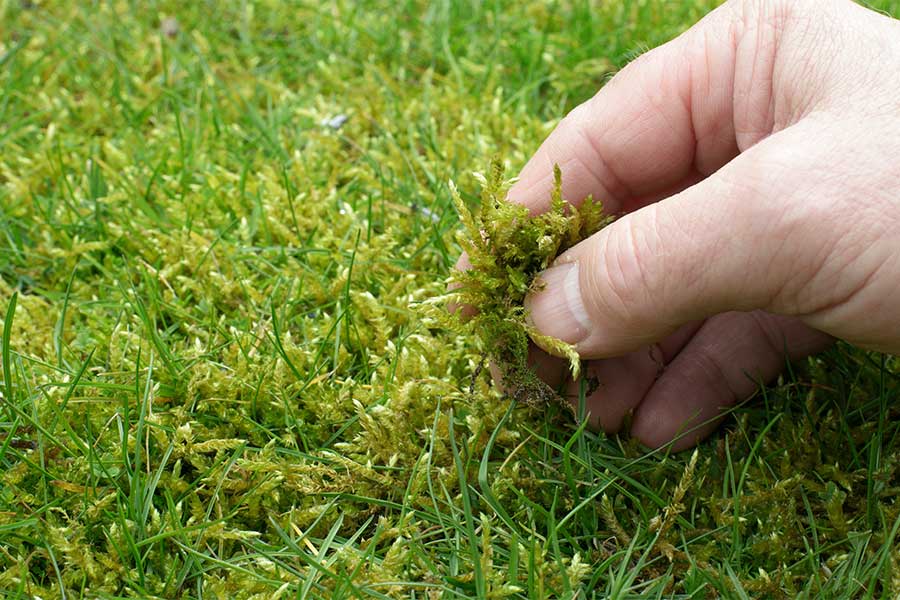
If your lawn is prone to moss, treat it before the coldest weather arrives. Moss spreads quickly in damp, low-light conditions and can take over weak areas of turf during winter. Dealing with it now will help your grass stay healthier and make spring recovery much easier.
To help with this, Miracle-Gro EverGreen Complete 4 in 1 is a good option, as it feeds the grass while also tackling moss and weeds. Or if you’re dealing with moss on hard, permeable surfaces like patios, gravel or decking, Resolva Moss Killer RTU is your best bet. Lightly spray onto the moss to clear it within as little as 24 hours and improve the look of your hardscaping.
For more advice on looking after your lawn throughout the year, find a month-by-month breakdown in our Seasonal Lawn Care Guide.
Wrapping up your lawn and mower winter maintenance guide
Preparing your grass and lawn mower for winter can save you money, prevent damage and give your lawn the best start for the year ahead.
Whether you need garden tools, lawn care products, storage solutions or expert advice, AWBS and our sister company Oxford Garden Centre is here to help.
Our branches in Oxford, Yarnton and Swindon are open 7 days a week or you can order online. We also offer free delivery to local postcodes with no minimum order value. Got a specific query? Give us a call on 01865 326500 and we’ll do our best to answer it for you.