


Block Paving vs Resin Bound vs Gravel Driveways: Which Is Best?
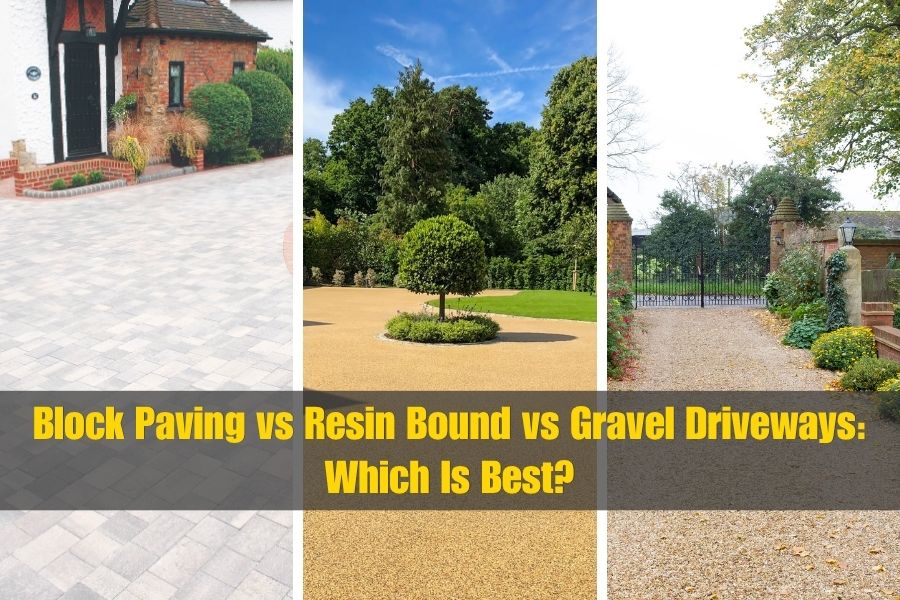
Choosing a new driveway surface is about more than simply picking a finish that looks good. The right surface can affect everything from drainage and maintenance to kerb appeal, durability and long-term value. Three of the most popular driveway options are block paving, resin bound and gravel, each suited to different property styles, budgets and practical requirements.
Some homeowners prioritise a contemporary aesthetic, while others want a more traditional look or a surface that is easy to maintain over time. Ultimately, the right choice will depend on your budget, property style and how you plan to use the space. In this guide, we compare all three driveway surfaces to help you decide which option is best for your project.
Quick answer: which driveway surface is best?
|
Driveway type |
Best for |
Main advantage |
Main drawback |
|
Block paving |
Smart, durable driveways with design flexibility |
Attractive, repairable and available in many colours/patterns |
Higher installation cost than gravel |
|
Resin bound |
Smooth, modern, low-maintenance driveways |
Seamless finish and good kerb appeal |
Needs specialist installation and suitable base |
|
Gravel |
Cost-effective, traditional and permeable driveways |
Affordable, easy to install and good drainage |
Needs occasional raking/top-ups and can move under tyres |
For many homeowners, block paving is the best all-rounder thanks to its durability, visual appeal and ease of repair. Resin bound driveways are ideal for achieving a smooth, modern finish with minimal maintenance. And gravel remains one of the most affordable and naturally permeable choices for larger or more traditional properties.
What should you consider before choosing a driveway surface?
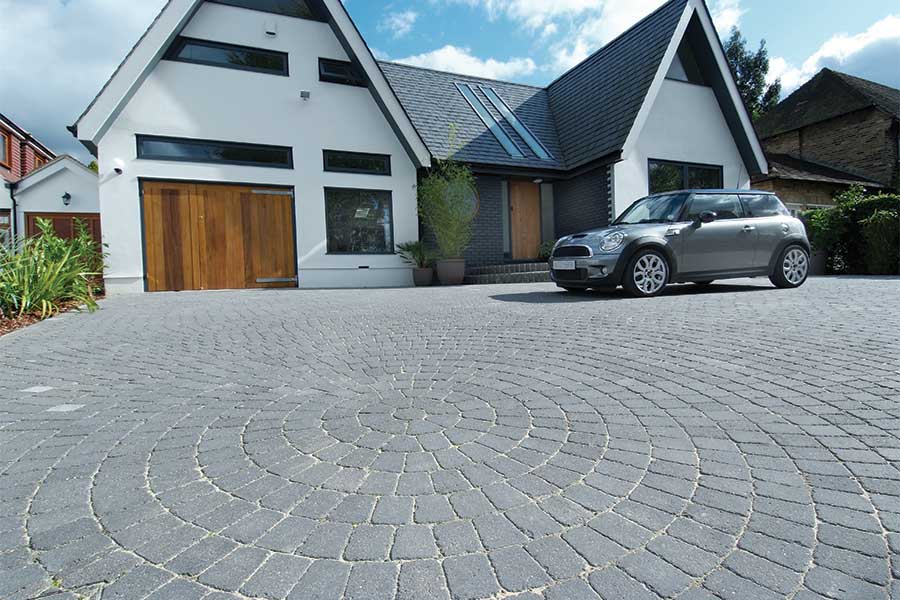
No single driveway material is perfect for every home. Some surfaces are well suited to heavy vehicle use, while others prioritise drainage, lower costs or a particular style of finish. Before comparing block paving, resin bound and gravel in detail, here are some key things to consider.
Appearance and property style
Your driveway can have a big impact on your property’s kerb appeal. Some surfaces are best suited to traditional homes, while others are designed to create a cleaner, more modern finish.
Initial installation cost
Driveway installation costs vary depending on material and the amount of groundwork required. Larger driveways, complex layouts and extra drainage works can also increase project costs.
Long-term maintenance
It’s also worth factoring in how much upkeep you’re happy to carry out. Some surfaces need regular raking, re-sanding or weed treatment, while others require very minimal maintenance.
Drainage and permeability
Good drainage is key to any driveway project and for meeting SUDs regulations. Permeable surfaces can help reduce standing water and allow rainwater to drain naturally into the ground.
Suitability for cars and foot traffic
Driveways need to cope with regular vehicle use as well as daily foot traffic. Some surfaces provide a firmer, smoother finish that is better suited to pushchairs, bicycles and wheelchairs.
Weed control
Different materials vary in how resistant they are to weeds and moss growth. The quality of the installation and groundwork can also affect how much ongoing maintenance is needed.
Repairs and replacement
Some driveway surfaces are easier to repair than others if damage or staining occurs. As a result, you should consider how easy it will be to maintain and refresh the surface in the future.
Lifespan
A driveway is a long-term investment, so durability must be a top priority. Remember, proper installation and groundwork will have a significant impact on how long the surface lasts.
Local planning considerations
Planning rules can affect which surfaces are suitable for your property, particularly for larger driveways or if you are expanding an existing driveway. Permeable surfaces and dedicated drainage solutions may be required to meet local authority planning requirements and regulations.
DIY-friendly or professional installation
Some driveway materials such as gravel are relatively straightforward to install, while surfaces such as block paving and resin bound gravel can require specialist equipment and professional installation. Your budget, experience and the complexity of the project may all influence which option is most practical for you.
Important UK planning and drainage considerations
In England, you don’t usually need planning permission for a new or replacement driveway in your front garden if the surface is permeable or drains sufficiently within your property boundary. However, if a driveway over 5m² uses non-permeable materials without suitable drainage, planning permission may be required. These rules form part of Sustainable Drainage Systems (SUDs) regulations, introduced to help reduce flooding caused by surface water runoff.
Fortunately, many popular driveway surfaces now have permeable alternatives, including gravel, permeable block paving and resin bound systems. As requirements vary for dropped kerbs, conservation areas and listed buildings, always check the latest GOV.UK guidance first.
Option 1 - Block paved driveways
What is a block paving driveway?
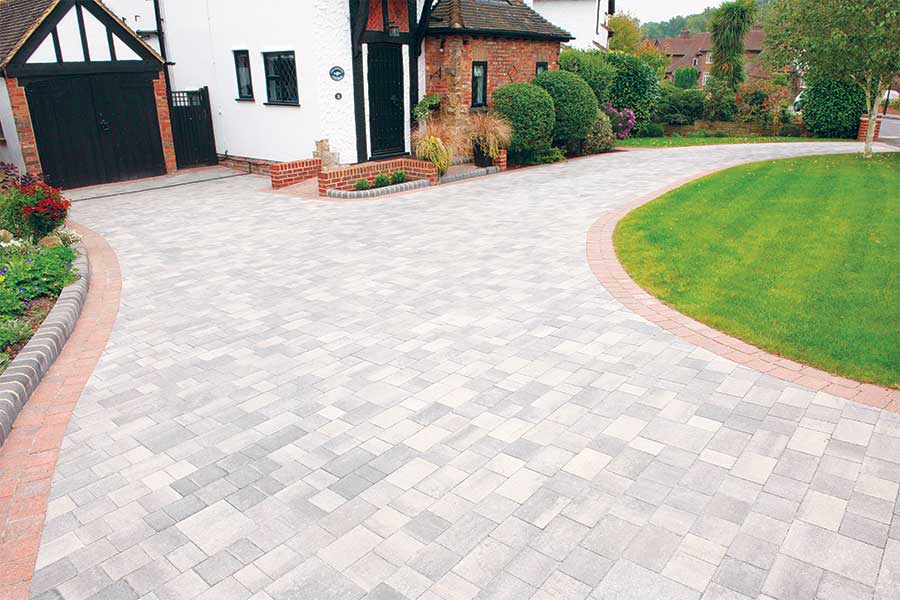
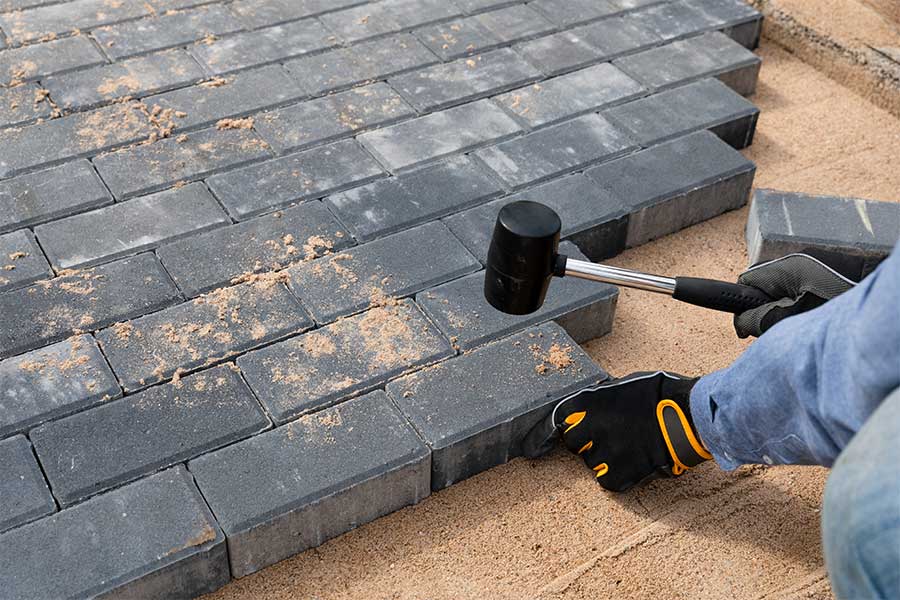
Block paved driveways are created using individual concrete or clay blocks laid over a compacted sub-base in interlocking patterns. Available in a wide range of styles and colours, the smaller blocks also allow for flexible laying patterns, driveway shapes and decorative finishes.
Benefits of block paving driveways
One of the biggest advantages of block paving is its appearance. With a wide choice of colours, textures and laying patterns available, it’s easy to create anything from a clean contemporary finish to a more rustic, traditional look. Decorative borders, edging stones and kerbs can also help define parking areas and improve kerb appeal.
Block paving is also practical and durable when installed correctly on a solid sub-base. The interlocking blocks are designed to cope with regular vehicle use, while individual blocks can be lifted and replaced if damaged or stained. Maintenance is relatively simple too, usually involving sweeping, occasional washing and topping up jointing sand when required.
Permeable block paving is also available for improved drainage. Products such as Brett Omega Flow allow water to drain through the joints and into the sub-base below.
Drawbacks of block paving driveways
Compared with gravel, block paving usually comes with a higher upfront installation cost due to the amount of preparation and labour involved. Proper sub-base preparation and compaction are essential to prevent movement or sinking over time. Block paving bricks will also be a little more expensive than gravel to buy but is generally a cheaper option than resin bound surfaces.
Although block paving is relatively low maintenance overall. Weeds and moss can occasionally appear between the joints, while jointing sand may need replenishing with time or after deep cleaning. Add more kiln dried sand is easy and simply a case of brushing into the gaps between the blocks.
Best suited to
- Homeowners who want a smart, long-lasting driveway
- Driveways that need clear parking areas and defined edges
- Customers who want a wide choice of colours and laying patterns
- Homes where future repairability is important
Option 2 - Resin bound driveways
What is a resin bound driveway?
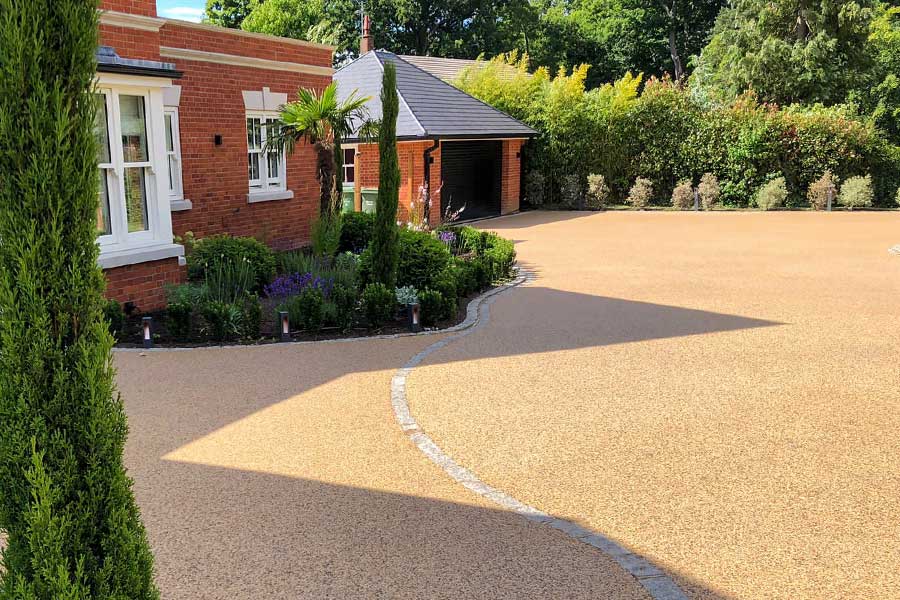
Resin bound driveways are created by mixing decorative aggregate with a clear resin before trowelling the mixture onto a prepared base to create a smooth, stone-textured surface. Unlike resin bonded driveways, resin bound systems fully coat the stones in resin to create a stable, permeable finish with no loose gravel underfoot.
Benefits of resin bound driveways
One of the top reasons homeowners choose resin bound driveways is their sleek appearance. The seamless finish creates a modern look and there are a multitude of aggregate colours and blends to choose from to complement modern and traditional properties.
Resin bound driveways are also highly practical. Unlike loose gravel, the stones are fixed in place, so the surface will not shift under tyres or require regular raking and topping up. This creates a smoother, more comfortable surface for walking, driving, wheelchairs and pushchairs.
When installed on a suitable permeable base, resin bound systems are also SUDs compliant and allow rainwater to drain naturally through the surface.
Drawbacks of resin bound driveways
Resin bound driveways are typically more expensive than gravel and block paving, requiring proper base preparation and expereince to achieve a durable, long-lasting finish. They are not generally considered a DIY-friendly option, as specialist equipment and experienced installers are usually needed to correctly mix, lay and finish the surface before the resin cures.
Best suited to
- Homeowners wanting a contemporary looking driveway
- Homes requiring a stable, wheelchair-friendly surface
- Customers prepared to use a specialist installer
- Driveways where good drainage and minimal loose stones are important
Option 3 - Gravel driveways
What is a gravel driveway?
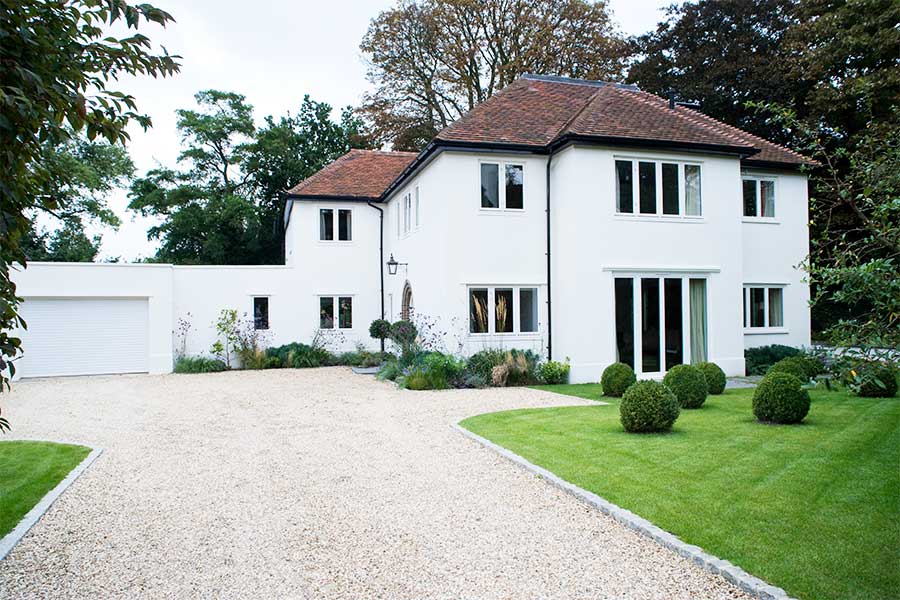
A gravel driveway uses loose decorative stone or aggregate laid over a compacted sub-base, generally with edging stones and a weed control membrane beneath. Gravel stabilisation grids can also be installed to reduce movement and create a firmer surface for vehicles and foot traffic.
Benefits of gravel driveways
Gravel is one of the most affordable driveway materials, particularly for larger areas where paving or resin may become expensive. It is relatively quick to install and naturally permeable when laid correctly, allowing rainwater to drain through into the ground below.
Decorative driveway gravel is available in numerous colours and stone types, making it suitable for properties of all styles. It works especially well with rural, cottage and period properties, while also being easy to refresh or top up over time.
Drawbacks of gravel driveways
Without stabilisation grids, gravel can move under tyres and foot traffic, creating uneven areas and increasing the need for occasional raking and topping up. Gravel may also spread onto surrounding paths or lawns without suitable edging. However, gravel grids can help to stabilise the surface and reduce movement, rutting and spread. They also create a surface that is easier to use with wheelchairs and pushchairs.
Weed growth can become an issue if poor-quality groundwork or membranes are used beneath the surface. Our Core Drive gravel gids feature a preinstalled weed membrane. Gravel can also be more difficult to clear in snowy conditions than solid surfaces.
Best suited to
- Large driveways
- Budget-conscious projects
- Rural and traditional properties
- Customers wanting a natural-looking surface
- Driveways where drainage is a priority
- Customers who want a simple, easy-to-refresh finish
Head-to-head comparison: block paving vs resin bound vs gravel
|
Factor |
Block paving |
Resin bound |
Gravel |
|
Appearance |
Smart, patterned, traditional or modern |
Smooth, seamless and contemporary |
Natural, informal and traditional |
|
Typical cost |
Medium to high |
Medium to high |
Low to medium |
|
Maintenance |
Sweep, weed control, joint sand top-ups |
Occasional cleaning |
Raking, weed control, top-ups |
|
Drainage |
Permeable options available |
Permeable if installed on suitable base |
Naturally permeable |
|
Repairability |
Individual blocks can be replaced |
Repairs can be more visible |
Very easy to top up |
|
DIY suitability |
Possible for competent DIYers |
Usually specialist installation |
Most DIY-friendly |
|
Best property style |
Most homes |
Modern/contemporary homes |
Rural, traditional and larger drives |
|
Long-term value |
Very strong if installed well |
Strong if installed well |
Good value, especially for larger areas |
What does each type of driveway cost?
The cost of a new driveway can vary significantly from one project to another. As Tom Budden of AWBS explains, “gravel is usually the cheapest driveway surface, block paving is a mid-range option, with resin bound surfaces typically the most expensive option.”
With that said, several factors can affect the final cost of a driveway installation, including:
- The size and shape of the driveway
- Ground conditions and the level of preparation required
- Whether an existing driveway needs to be removed
- The depth of sub-base and extent of drainage works needed
- Existing issues such as subsidence or surface cracking
- Your choice of edging, kerbs and decorative borders
- Regional labour costs and site access limitations
The table below is intended to provide an indicative comparison of material, sub-base and installation costs for gravel, block paving and resin bound driveways. Actual prices will vary due material costs, your chosen surface material, your location and the complexity of your project. Material costs are based on AWBS products and labour estimates are based on average prices in the South of England. This comparison does not include plant hire and operating costs.
|
Cost item |
Gravel driveway |
Block paved driveway |
Resin bound driveway |
|
Surface material cost |
£10–£15 per m² |
From £25 per m² |
£40–£70 per m² |
|
Sub-base materials cost |
£20–£25 per m² |
From £40 per m² |
From £40 per m² |
|
Labour / installation cost |
From £25–£35 per m² |
From £40–£55 per m² |
From £45–£65 per m² |
|
Indicative total cost |
From £55–£75 per m² |
From £105–£120+ per m² |
From £125–£175+ per m² |
|
Typical cost position |
Usually the lowest-cost option |
Mid-range to premium |
Usually mid to high cost |
Advice for selecting a contractor and comparing prices
Tom also offers some useful advice for comparing quotes and choosing the right contractor for your driveway project. As he explains, “when comparing quotes for a new driveway, it is important to look at the detail and not just the total price.”
Before approaching contractors, prepare a clear brief outlining your preferred driveway surface and any known issues such as drainage problems, subsidence, restricted access or the removal of an existing driveway. Then, when reviewing quotes, consider the following:
- Has the contractor clearly understood your requirements?
- Does the quote separate costs for materials, groundwork, labour, drainage and waste removal?
- Does the contractor have experience installing your chosen driveway surface?
- Can they provide reviews or examples of similar projects?
- Have they identified any potential issues and explained how these would be resolved?
- How clearly do they communicate and answer your questions?
Another top tip from Tom is that: “The cheapest quote is rarely the best option. A good driveway contractor should provide a detailed quote, clear and impartial advice, explain the work required and how it will be done, and give you confidence that they can deliver the project to a high standard and on budget.”
Which driveway is easiest to maintain?
Resin bound driveways are generally the lowest maintenance thanks to their smooth, sealed surface and reduced weed growth. Block paving may occasionally need weed treatment and jointing sand top-ups, while gravel typically requires some raking and periodic topping up.
Which driveway is best for drainage?
Gravel is naturally permeable, making it one of the best options for drainage when installed over a suitable sub-base. Permeable block paving and resin bound systems can also provide excellent drainage performance when installed correctly.
Which driveway looks best?
Block paving is incredibly versatile and pairs well with a range of homes, depending on the style you choose and the laying pattern. Resin bound surfaces create a streamlined modern finish, while gravel also suits modern and more established properties.
Which driveway lasts longest?
All three driveway types can last for many years when installed correctly, with proper drainage and groundwork playing a major role in long-term performance. Block paving is highly durable and easy to repair, while gravel can be refreshed indefinitely with additional stone as needed. Better yet, Addagrip’s BBA-approved resin bound systems are expected to last 25 years and are guaranteed when installed by approved contractors.
Which driveway surface material is best for your home?
Choose block paving if...
- You want a smart, durable driveway with long-term appeal
- You like defined patterns, borders and design flexibility
- You want a surface that can be repaired in sections if needed
- You are looking for a premium finish with a large choice of styles and colours
Choose resin bound if...
- You want a smooth, modern and seamless finish
- You are planning to use a specialist installer
- You like the appearance of decorative aggregate without loose gravel
- Kerb appeal and low maintenance are priorities
Choose gravel if...
- You want a cost-effective driveway solution
- You need a naturally permeable surface for drainage
- You have a larger driveway area to cover
- You prefer a rustic, rural or traditional appearance
Materials you may need for a driveway project
Depending on the type of driveway you choose, you may need additional materials alongside the surface itself. Common requirements include MOT Type 1 sub-base aggregate, sharp sand, edging stones, kerbs, drainage products and installation accessories. For gravel driveways, weed control membranes and gravel stabilisation grids can also help improve performance and reduce maintenance over time.
At AWBS, we stock a range of high quality driveway and landscaping materials, including block paving, decorative gravel and more. We also have several handy buying and laying guides online to help you plan DIY projects more confidently.
Why buy driveway and landscaping materials from AWBS?
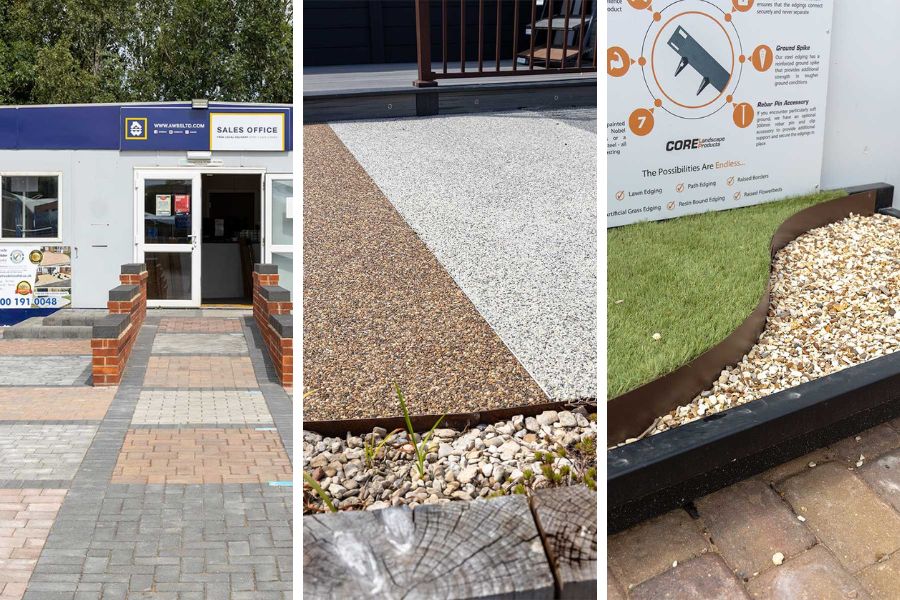
You can explore products online or visit our landscaping display areas in Oxford, Yarnton and Swindon to compare materials in person. Our experienced team can also offer practical advice on suitable products, quantities and installation requirements.
Whatever you choose, you can expect competitive pricing and free local delivery within 25 miles of our branches, with no minimum order value. Delivery is also available on many products ordered online to mainland UK addresses.
FAQs
Where can I view block paving, resin bound gravel and gravel for driveways?
Each AWBS branch has its own dedicated outdoor display area, showcasing many types of block paving, driveway gravel and edging stones. You can also see installed examples of Addagrip resin bound gravel surfaces and paving, helping you to compare materials, colours and finishes. Speak to our expert staff for advice in store at Oxford, Yarnton or Swindon.
Is block paving better than gravel for a driveway?
Block paving usually gives a smarter, more formal finish and is easier to walk on, but gravel is cheaper and naturally permeable. Block paving offers a more premium finish, while gravel is a good choice for larger or more traditional driveways.
Is resin bound better than block paving?
Resin bound driveways give a smooth, seamless and modern finish, while block paving offers more pattern options and simpler repairs. Resin bound is usually best installed by specialists, whereas block paving may be more familiar to landscapers and driveway installers.
What is the cheapest driveway surface?
Gravel is usually the cheapest driveway surface, especially for larger areas. The final cost will depend on excavation, sub-base, edging, drainage, labour and the type of gravel chosen.
Do I need planning permission for a new driveway?
You may need planning permission if you’re laying more than 5 square metres of impermeable surface in a front garden and water is not directed to a permeable area. Permeable surfaces such as gravel or permeable block paving generally avoid this issue, but you should check local requirements before starting work.
Which driveway surface is best for drainage?
Gravel is naturally permeable and is often a good choice for drainage. Permeable block paving and resin bound surfacing can also drain well when installed correctly over a suitable base.
Does gravel move around on a driveway?
Yes, loose gravel can move under tyres and foot traffic. Good edging, the right gravel size, correct depth and stabilisation grids can help reduce movement.
Can weeds grow through block paving or gravel?
Yes, weeds can appear in joints, gaps or loose surfaces over time. A properly prepared base, good jointing, weed control membrane and regular maintenance will help reduce weed growth.
Which driveway surface is best for a modern house?
Resin bound and contemporary block paving are both good choices for modern homes. Resin provides a sleek, smooth finish, while block paving offers sharper lines and pattern options.
Which driveway surface is best for a country property?
Gravel’s softer appearance is a good choice for country homes, cottages and rural properties, and also complements more relaxed landscaping and planting. Block paving can also work well if you choose colours and textures that suit your property.